About Michael Korican

A long-time media artist, Michael’s filmmaking stretches back to 1978. Michael graduated from York University film school with Special Honours, winning the Famous Players Scholarship in his final year. The Rolling Stone Book of Rock Video called Michael's first feature 'Recorded: Live!' "the first film about rock video". Michael served on the board of L.I.F.T. when he lived in Toronto during the eighties and managed the Bloor Cinema for Tom and Jerry. He has been prolific over his past eight years in Victoria, having made over thirty-five shorts, won numerous awards, produced two works for BravoFACT! and received development funding for 'Begbie’s Ghost' through the CIFVF and BC Film.

Gravitas Movies becomes the latest streamer

Dave McNary reports, in an exclusive for Variety, that Gravitas Ventures has launched its own OTT streaming venture: Gravitas Movies.

President Michael Murphy says,

“At Gravitas we have always taken pride in being a distributor that can connect the artist and the consumer. By launching our SVOD service, we are taking the next step in bringing our vast young library of films to a global audience.”

Available now, the price is $4.99 monthly or $39.99 annually.

The service is built with Float Left‘s Flicast.

My take: Another one! And Apple has teased Apple TV+. Plus Disney is in the wings with their upcoming service. Really, how many streaming services do they think we can subscribe too? In a world with unlimited virtual real estate, everyone is building virtual digital cinemas/TV stations/nickelodeons hoping to attract our eyeballs. However, we all have limited attention, and pockets. In the analogue world, your choice of movie theatre was limited to ones in the vicinity; your TV set only picked up so many channels and what was playing was mediated by various levels of middlemen. Today, the trick for SVOD is to either go big or go small; have everything or only have one genre or otherwise appeal to a niche audience.

Sony Pictures Television Studios looking to cut costs

Ryan Faughnder reports in the LA Times that Sony Pictures is launching a specialty TV label for lower-cost shows.

ABSENTIA SEASON 2 PREMIERES JUNE 14th ON AMAZON!! ???????????????? All ten episodes of season two willdebut to Amazon Prime Video members in the US, UK, Germany, Australia, Austria, India, Israel, Italy, Netherlands,Singapore, South Korea, and other select territories globally. ???? ???????????? ???????????????????????????????????????????????????????????????????????????????????????? Please Check with your local providers for additional information on countries not listed. #Absentia Stana Katic Patrick Heusinger

Posted by Absentia on Thursday, March 14, 2019

Sony Pictures Television said it:

“…is launching a new production unit to make high-quality shows at a lower cost than the typical series, by taking a page from the indie film playbook. Jeff Frost, President of Sony Pictures Television Studios, told employees that the new label would focus on “producing distinct television programming in the indie feature film style.” The company expects to save money by filming in less expensive locations that offer production incentives, shooting more than one episode at a time and filming over shorter periods.”

This is the business model they used to launch Absentia on their worldwide network AXN.

It seems increased demand for quality television series has raised prices, so more integrated media companies are exploring ways to produce cheaper product.

My take: Did you know Absentia is shot in Bulgaria? I think the trend to more television, perhaps with lower budgets, shot feature-style is a good thing. It means more storytelling. So when you find something that clicks with you, you can immerse yourself into its world. It also means more work around the world for film craftspeople, which can only lead to more local indie work over time.

Spielberg wants to make it harder for Netflix to win a best picture statuette

Zack Sharf reports on IndieWire that Netflix has responded to Steven Spielberg’s lobbying for rule changes (that would make it harder for the streamer to win more Academy awards) with a tweet:

From the Orlando Sentinal:

“Spielberg, an Academy of Motion Picture Arts and Sciences governor representing the directors branch, reportedly is planning to propose rule changes that would prevent streaming services such as Netflix, Amazon and Hulu from competing in the Academy Awards without their projects getting a full theatrical run first.”

He makes his case next month, per Anne Thompson:

“Last Thursday, an Amblin spokesperson confirmed that Academy governor Spielberg will bring up at the next Board of Governors rules meeting in April proposed changes that would force streamers such as Netflix to fulfil a more robust theatrical distribution requirement than the 2012 rules demand to qualify for Oscar consideration. It’s not at all clear that Spielberg has enough backing from the 54-member board to put through those rule changes.”

Netflix has won many awards, including their first Academy Award in 2017.

My take: I think Spielberg is afraid of change and the massive buying power of the streaming platforms. He loves movies and cinemas. I too would hate to see the theatre-going experience fade away. But that’s partly the film industry’s fault since they put so much emphasis on movies based on comic books. Imagine how interesting cinemas would look like if comic book movies were banished to TV.

Filmocracy deserves your support

There’s an interesting project on Kickstarter I want you to seriously consider funding: Filmocracy.

Paul Jun and his team are developing a streaming platform for independent filmmakers that gamifies watching new movies and rating them.

Ratings won’t be simply thumbs up or thumbs down. Instead, viewers will be able to select 1-5 for:

  • Plot
  • Characters
  • Cinematography
  • Performances
  • Dialogue
  • Sound/Music
  • Overall

Half of revenue will be returned to filmmakers based on time screened with another 10% going to viewers.

Check out their pitch and please contribute.

My take: I think this is an interesting model that might just take off. Gaming is huge so why not gamify indie streaming? I’m a backer!

The (almost) free self-distribution strategy

Three self-distribution lessons today from L.A. filmmaker Noam Kroll.

Two have no cost, so I’m keenly interested.

Noam shares the distribution strategy for his latest feature Shadows on the Road: TVOD for two months, then SVOD and finally AVOD.

For the Transactional Video on Demand (TVOD) window, Noam chose Distribber ($1,500) to place his film on iTunes. He promoted it hard and was in the black within months because the budget was so low ($12,000.) Later he added it to Vimeo On Demand for international audiences.

For the Subscription Video on Demand (SVOD) window, Noam used Prime Video Direct ($0) to place the film on Amazon Prime.

For the Ad-based Video on Demand (AVOD) window, Noam used FilmHub ($0) to place the film elsewhere — they have ~75 other platforms. You may or may not have heard of many of these: TubiTV, Fandor, Filmocracy, etc.

His goal with this strategy was to break even and then maximize his exposure.

My take: thank you, Noam, for being so transparent here. The key to this successful strategy is to set the financial bar low enough that you can recoup your budget within a few months and then build as many fans as possible.

The crowdfunding platform with best campaign success rate in the world

Emily Best and her team at Seed&Spark are smiling.

After six years in business, they can claim a crowd funding success rate of 79% in 2018 and an average raising of nearly $15,000 per project.

(By comparison, Kickstarter’s rate was 37% and Indiegogo’s rate was 12%.)

But wait, there’s more!

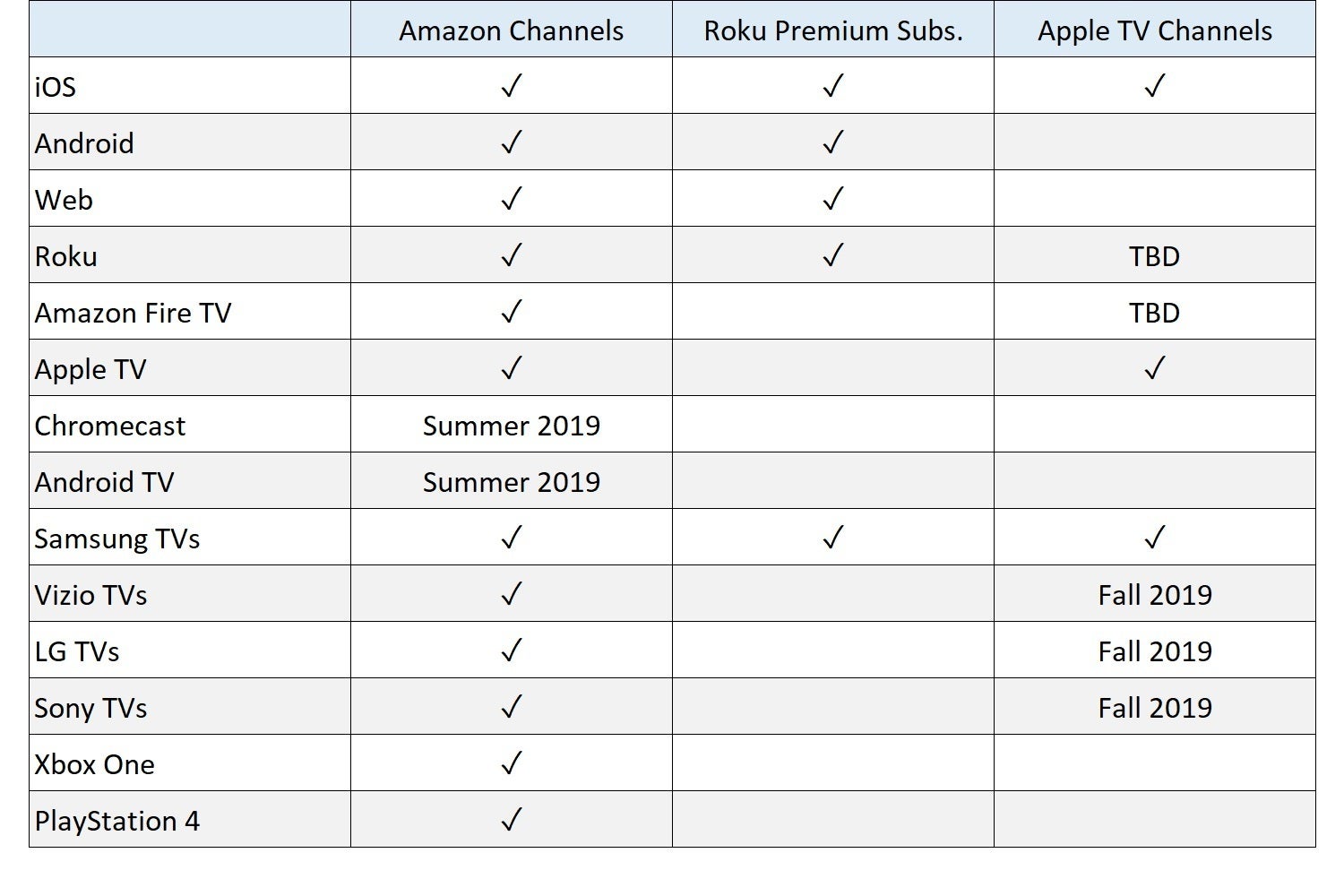
In addition to being a purpose-built crowd funding platform for film and TV, Seed&Spark is also a distributor and streamer (web, Roku and AppleTV):

“We focus on bringing you wild and wonderful movies and shows from diverse independent filmmakers as well as programming playlists (collections of movies and shows) that you can’t find anywhere else. From festival film favorites to award-winning documentaries to blocks of short films, watching on Seed&Spark means you have many, many, many lens from which to see the world.”

By the way, here’s their origin story:

“In 2011, film producer Emily Best was working with an all-female team to make ‘Like the Water,’ a film they hoped would be at least a drop in the bucket toward more holistic representation of women on the big screen. Unsurprisingly, they hit every imaginable road block in putting the project together, and with just 60 days left before they were scheduled to start shooting, she needed to find $20,000 to finishing financing production. Taking inspiration from the wedding registry model, she and her team created a simple website that listed the items they needed to finish the film – camera, car rentals, grip and electric, coffee – and included a PayPal to accept donations. Over the next month they raised $23,000 in cash – and more than $200,000 in loans and gifts of locations, goods, and services. ‘Like the Water’ would go on to play more than 20 festivals around the world, and the lessons Best learned while crowdfunding – and then trying to get distribution for her film – became the foundation of Seed&Spark.”

My take: Impressive! And Canada friendly too. Worth checking out for your next project.

Summarizing Coverage on 12,000 Screenplays

Stephen Follows has just released a report that all writers should download immediately.

“Judging Screenplays by their Coverage” co-authored by Josh Cockcroft with Liora Michlin, is a free 67 page PDF analysis of over 12,000 feature film screenplays and their scores by professional readers.

There are three sections: How to Impress Script Readers, The Average Screenplay and Screenwriters and The Act of Screenwriting.

You owe it to yourself to download it and read it fully (no email address required!) but here’s an executive summary from Stephen:

  1. Know thy genre. Your priorities should rest on the particular nature of your chosen genre. For example, Family films place the highest premium on catharsis, while for Action films it’s plot.
  2. Some stories work better than others. The vast majority of scripts can be summarized using just six basic emotional plot arcs – and some perform better than others.
  3. If you’re happy and you know it, redraft your script. Film is about conflict and drama and for almost all genres, the happier the scripts were, the worse they performed. The one notable exception was comedy, where the reverse is true.
  4. Swearing is big and it is clever. There is a positive correlation between the level of swearing in a script and how well it scored, for all but the sweariest screenplays.
  5. It’s not about length, it’s what you do with it. The exact length doesn’t matter too much, so long as your script is between 90 and 130 pages. Outside of those approximate boundaries scores drop precipitously.
  6. Don’t rush your script for a competition. The closer to the deadline a script was finished, the worse it performed.
  7. Use flashbacks responsibly. Scripts with more than fifteen flashbacks perform worse than those with few to no flashbacks.
  8. VO is A-OK. Some in the industry believe that frequent use of voiceover is an indicator of a bad movie, however we found no such correlation. We suggest that any complaints on the topic should be sent to editors, rather than writers.
  9. Don’t worry if you’re underrepresented within your genre – it’s your superpower. Female writers outperform male writers in male-dominated genres (such as Action) and the reverse is true in female-dominated genres (such as Family).

My take: I love everything Stephen does! The correlations he reveals here are fascinating. For instance, films (except comedies) with negative sentiments score better.

Canadians treated to Super Bowl ads for last time

The best thing about Sunday’s low-scoring NFL Super Bowl football game was the ads, hands down.

The CRTC has outlawed the simultaneous substitution of American ads with Canadian ads for the last three Super Bowls.

However, the “New NAFTA” trade agreement between Canada, Mexico and the United States will again allow the practise, once it’s ratified.

That means this was the last Super Bowl that Canadians could watch the big budget U.S. ads.

It’s all about money. Bell Media can’t sell its ad space for as much when almost half of Canadians switch to the American network instead.

In case you missed them, here are the Super Bowl 2019 commercials.

My take: these were my favourites in no particular order:

  • Stella Artois with Sarah Jessica Parker and Jeff Bridges
  • Mint Mobile chunky milk
  • Devour Meals food porn
  • Bubly and Buble
  • Michelob Ultra ASM
  • Amazon Echo fails

Distribution lessons learned the hard way

Avril Speaks, writing on Dear Producer, shares her recent experience with the distribution of Jinn by Orion.

“I recently had a conversation with a friend who used to work in distribution and she said, ‘Distributors make money off of your ignorance.’ Truer words have never been spoken.”

Avril shares these lessons:

  1. Know, Show and Prove: Every filmmaker should have an idea of what they want to happen to their film after it’s completed.
  2. “Meaningful Consultation” is Meaningless: Once you turn over your film to the distributor, it is theirs and they have the right to do with it and package it however they please.
  3. Day and Date Releases Aren’t What They Seem: Know that the focus for day-and-date releases is more on VOD than it is on theaters, which means that if you had high hopes for a theatrical presence, you might need to rethink your expectations and your marketing strategy.
  4. Negotiate Delivery: Do not sign a contract without seeing the deliverables list first.
  5. Speaking of Delivery: Your distributor will have lots of demands that are difficult for you to achieve with limited resources (which is why I advise you ask for a portion of your MG upfront).
  6. Minimum Guarantee: Ask for a portion of your MG to be paid upfront so that you can pay for delivery expenses.
  7. “Let’s just finish the film; if we get a distributor, we’ll let them handle everything else.” Your distributor will not pay for your music, they will not pay for your clearances, they will not throw you a party, they will not handle all of your marketing and press needs.
  8. Reach Out: Find yourself a community of producers who can help you walk through the process.

My take: it seems if you have a year or two to invest in your brainchild, self-distribution is an option to seriously consider.

Infographic: Film genre popularity over the last 100 years

Bo McCready has release a fascinating infographic illustrating the relative popularity of film genres since 1910.

Visit the page and click on the ‘Click to Standardize Axis Range’ button to be truly able to compare genres with each other.

Hover over each graph to reveal the top five IMDB voted or rated movies for each year in each genre.

Some observations:

  • Two in five movies are either comedies or documentaries.
  • Four in ten movies are either thrillers, horror, action or romance.
  • The remaining two in ten movies are either crime, sci fi, fantasy, war, musicals or westerns.
  • Genres declining in popularity over the last two decades: romance and crime.
  • Genres increasing in popularity over the last two decades: documentary and horror.

My take: I love charts because they graphically add meaning to data. See The Numbers for a different take on film genres. The American Film Market has analyzed genre popularity around the world too.