How to spark ideas

Simon Meyer, of Berlin, has just released How To Get Good Ideas For AI Films on YouTube.

Simon knows his stuff! He and co-creator Muhannad Nassar won the $150,000 grand prize at Higgsfield AI’s March 2026 Action Contest with their two-minute short film Grandma vs Wasp. Simon also won the Runway Big Ad Contest – twice.

Watch his video! And here are some quotes:

“The best way to have a good idea is to have a lots of ideas and throw the bad ones away.”

“There are a lot of creative techniques like the “What If” technique where you ask a question like, “What if cars could eat cake?” or the “Genre Mash Up” technique which is very popular on TikTok like mixing the horror genre with an ad for toothpaste.”

“I would recommend another technique using “The Opposite of What People Expect” — find the opposite of what everyone is expecting. That’s one of the strongest techniques, at least for me.”

“Another technique that I use quite often is the “Different Angle” technique. To everything, there are multiple angles. Is the glass half full or half empty? The optimist says it’s half full and the pessimist says it’s half empty. But those are just two angles everyone knows. A physicist would say the glass is always full. It’s half water and half air. Someone who just crossed a desert couldn’t care less about the level at all. To them, it’s survival…. The magic is never in the what — it is in who is looking at it.”

“The best advice I can give is make it personal. Make it yours. You can come up with whatever you want. You don’t need to stick to rules. Break the rules, be creative, and do whatever you want.”

My take: Great advice! Personally, inspiration strikes and I develop from there. But I can see that brainstorming many, many ideas first can unearth a real gem.

Cinematic AIGV Workflow

Seattle’s Yutao Han, aka Tao Prompts, has just released a great resource called The Cheat Code to Cinematic AI Videos on a Budget.

He ranks ten factors that influence the realism of generated video. In order from least to most important, here they are:

  1. Resolution
  2. AI Video Model
  3. AI Image
  4. Sound Design
  5. AI Prompts
  6. Camera Shot
  7. Colour Grade
  8. Lighting
  9. Reference Materials
  10. Idea

Some takeaways:

  • Image to Video is the standard workflow. Create lots of cheaper images and then choose the right model to animate them. 1080p seems to be the sweet spot between speed, resolution and cost.
  • Start with a great image as an expensive video model won’t necessarily fix a poor one. To this end, using an LLM to reverse-engineer reference material can help.
  • Expect to recreate sound in your edit.

My take: What’s fascinating about this list is that the top five factors plus sound design are traditional filmmaking concepts. In Yutao’s mind, the technical aspects of AI generated cinematic videos are less important than starting with a great idea and wrapping it in the elements that will express it best. In other words, begin with a story worth telling.

Marketing Tips for Independent Films

Maggie Bera tells us on FilmFreewayHow to Build Your Film’s Buzz Before You Call It a Wrap.

This no-nonsense, list-heavy article suggests seven areas indie filmmakers must address if they hope to get any attention focussed on their projects. Maggie says:

  • “Set up your film’s online home before you roll camera.
  • Assign someone to capture behind-the-scenes content.
  • Turn your cast and crew into ambassadors.
  • Plan your content before production begins.
  • Think beyond the trailer.
  • Build an email list before you need one.
  • Celebrate every milestone.”

She then lists many steps you can take to accomplish this:

  1. “Reserve your film’s website domain.
  2. Create an Instagram account (or dedicate a Highlight on your existing account).
  3. Write a one-sentence logline and short synopsis.
  4. Set up a simple landing page with an email signup.
  5. Choose a consistent username and visual branding.
  6. Hire a still photographer and capture pictures of: The slate on Day 1, Hair and makeup, Camera and lighting setups, The director working with actors, Crew members collaborating, The monitor during playback, Production design details, A wrap photo after each shooting day.
  7. Create social media content such as: Meet the cast, Meet the crew, Five questions with our cinematographer, Why I joined this project, Favorite moment from set; utilizing a reusable template in Canva so every cast and crew spotlight has a consistent look.
  8. Build a social media content creation calendar and add it to your production schedule, including activities like: your first table read, costume fittings, camera tests, location scouts, rehearsals, the first day on set, wrap day, editing sessions, your composer’s recording session, etc.
  9. Create and post a trailer.
  10. Also share: production stills, filmmaker interviews, screenplay excerpts, behind-the-scenes photography, and conversations about your creative process. This might include: Storyboards, Prop-building videos, Costume sketches, Lighting diagrams, Editing comparisons, Notes from your director’s notebook, etc.
  11. Invite people to join your Email List through: Your website, Crowdfunding campaigns, QR codes on business cards, Networking events, Your social media bio, a “Stay Updated” form on your website, etc.
  12. Share every milestone as a story worth celebrating, such as: Finishing the script, Wrapping principal photography, Picture lock, Composer recording sessions, Color grading, Festival submissions, Festival acceptances, Your first public screening, etc.”

My take: Maggie’s task breakdown for the social media marketing of an indie film is great, both thorough and concise. I love that its unspoken goal is to capture attention online and attract future viewers into the world of your film, to ultimately convert them into super-fans so that they become your ambassadors. Remember, word of mouth is the best form of promotion.

First original film of the 2020s to pass $500M

Curry Barker‘s horror hit, ‘Obsession’ Becomes Hollywood’s First Original Film of 2020s to Gross $500 Million Worldwide, according to Jeremy Fuster of TheWrap.

According to The Numbers, it made $263,451,715 in the US and Canada and $238,212,000 in the rest of the world for a total of over $501,663,715.

Barker’s advice to young filmmakers, via Jake Coyle of The Associated Press:

“I went to a film school for a year out in L.A. and I watched people paralyze themselves with the pressure of: I’ve told people I’m a director so now I have to direct something that has to be good. If it’s not good, everyone’s going to judge me. The result of that thinking is two years on one short film. You can’t put too much pressure on an idea. You just got to make it.”

My take: so, not a good first date flick.

To what extent does nepotism help movies get made in the industry?

Stephen Follows on Substack just asked What percentage of Hollywood film professionals are nepo babies?

He researched the top 100 movies of this millennium to find out.

He “counted someone as having family ties if a parent or close blood relative (i.e. a sibling, grandparent, uncle, aunt or cousin) worked in film or television before that person’s own entry into the industry.”

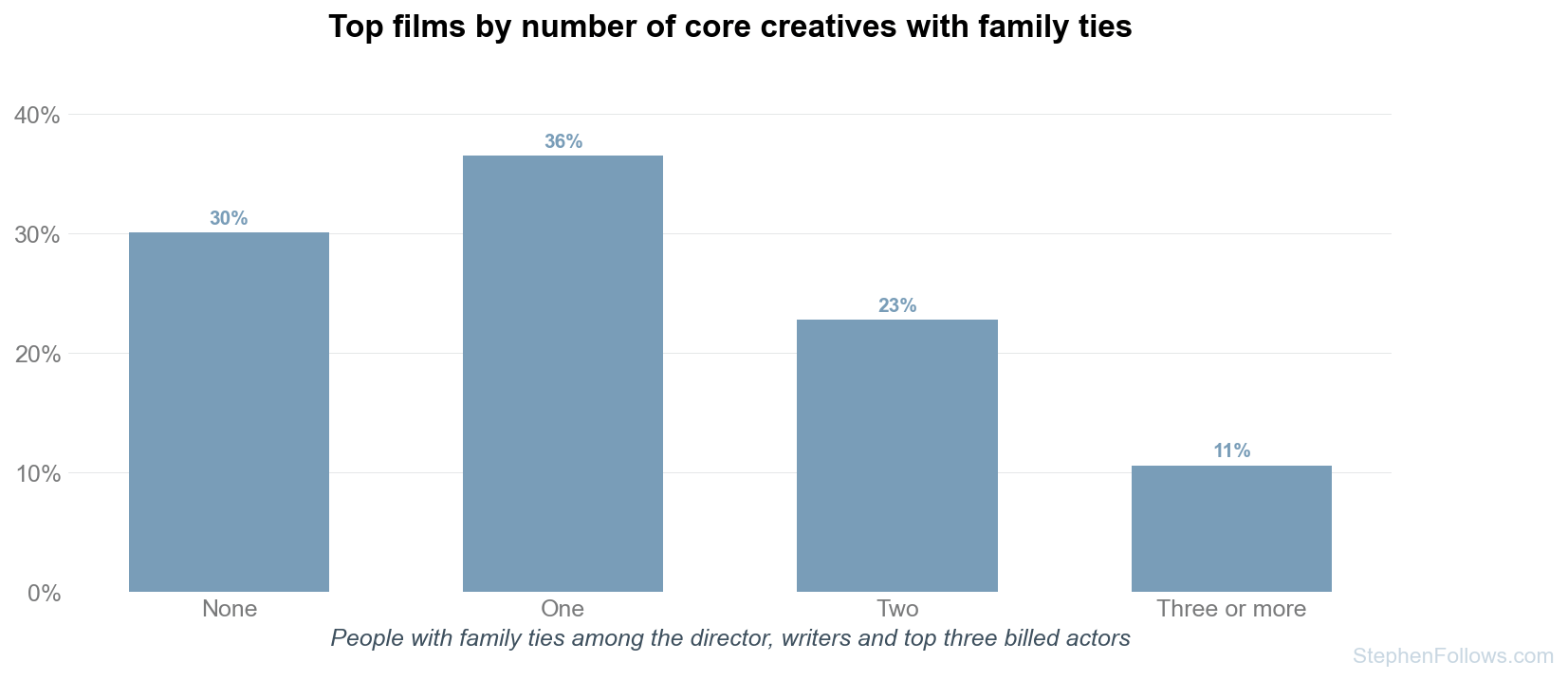
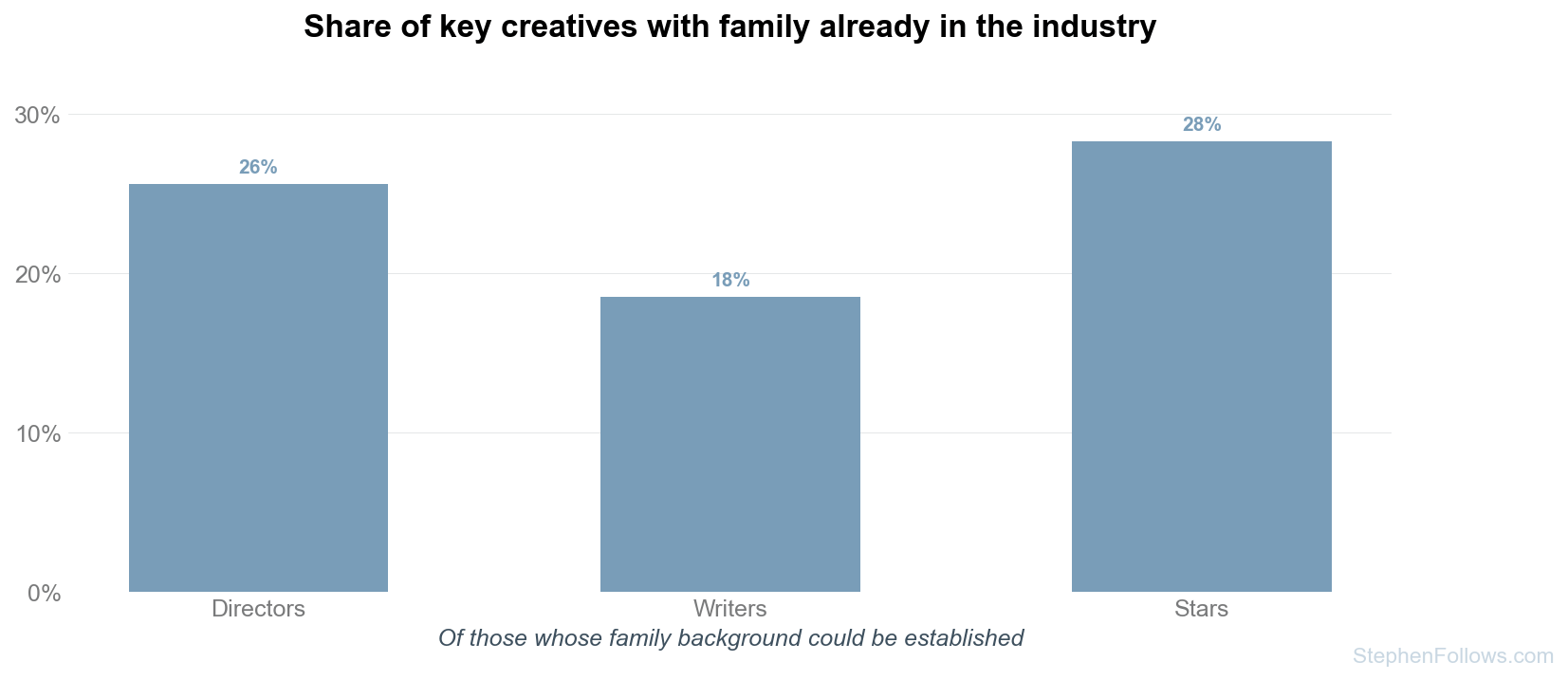
And there are a lot of key creatives with family in the industry already: 28% of top actors, 26% of directors and 18% of writers.

Crunching the numbers, Stephen concludes:

“Seven in ten of the biggest films of the past 25 years had at least one person with industry family at the heart of their creative team.”

The full post is worth reading because Stephen looks at the trend, if the films perform better and career impact. He finishes with:

“Family ties get you a modest start earlier, keep you in the game longer, and buy you another roll of the dice when a film disappoints. The surname is more of a safety net than some kind of accelerator or guarantee.”

My take: this is a new spin on, “It’s about who you know.” But it does go far in explaining why Hollywood seems slow to adapt to new trends. I just wish @stephenfollows would break out these stats for Canada, the UK and Australia.

Is Generative AI Video at the Bad CGI stage?

Recently, I wondered about the parallels between VFX and GAIV. I found two interesting YouTube videos:

Breakdowns & Blockbusters laments that CGI is getting Worse.

In Is Traditional VFX Dying? ErikDoesVFX went head to head with Higgsfield, pitting modern VFX against GAIV. His wife claims victory, but then he reveals Higgsfield’s second, more creative version:

My take: the genie is out of the bottle and GAIV is just another tool that creators now have in their toolkit. I predict Hollywood will quickly become its biggest user simply because their schedules and budgets will render traditional VFX unfeasible.

Book Publishing Trends for Indie Filmmakers

Following up on how we can adapt the Indie Music Fan Playlist for indie film, Jo Light on No Film School offers 3 Book Publishing Trends Screenwriters Should Steal.

After watching John Matthew Fox’s video that breaks down five trends reshaping the publishing industry in 2026, she thinks three can also apply to indie filmmaking.

John’s five topics, and Jo’s three comments are:

1. Selling Direct is the Future: “…rethinking funding and distribution; instead of chasing traditional distribution deals that take 30-50% (or more) of your revenue, you can sell directly to audiences and keep most of what you earn.” Check out her article to see which outlets she suggests.

2. How to Deal with the AI Explosion: “The fact that you are a human writer can be the thing that sets you apart.”

3. Growth of Deluxe Editions and Collectibles: Jo skips this but I think the comparables for film are: printed scripts, posters, and DVDs with BTS extras. Could also be the unique props in your movie!

4. BookTok is the Goliath in the Room: FilmTok “content can be diverse — thirst traps, reviews, dramatic or comedic edits, even picture slides.”

5. The Audiobook Takeover: Jo skips this but I think the comparable for film is an episodic Podcast version of the feature.

Jo sums up her summary with:

“Gatekeepers matter less. Direct audience relationships matter more.”

My take: I think the parallels between books and features are stronger than those between music and movies. Both books and films require undivided attention by the audience for extended periods of time. Both have exclusive, established industries that in are the middle of adapting to the digital future. I think the audiobook/podcast option holds a lot of promise.

How to adapt the Direct-to-Fan Playbook for indie movies

musicben released “The direct-to-fan playbook in 2026” on STVDIO+ earlier this year.

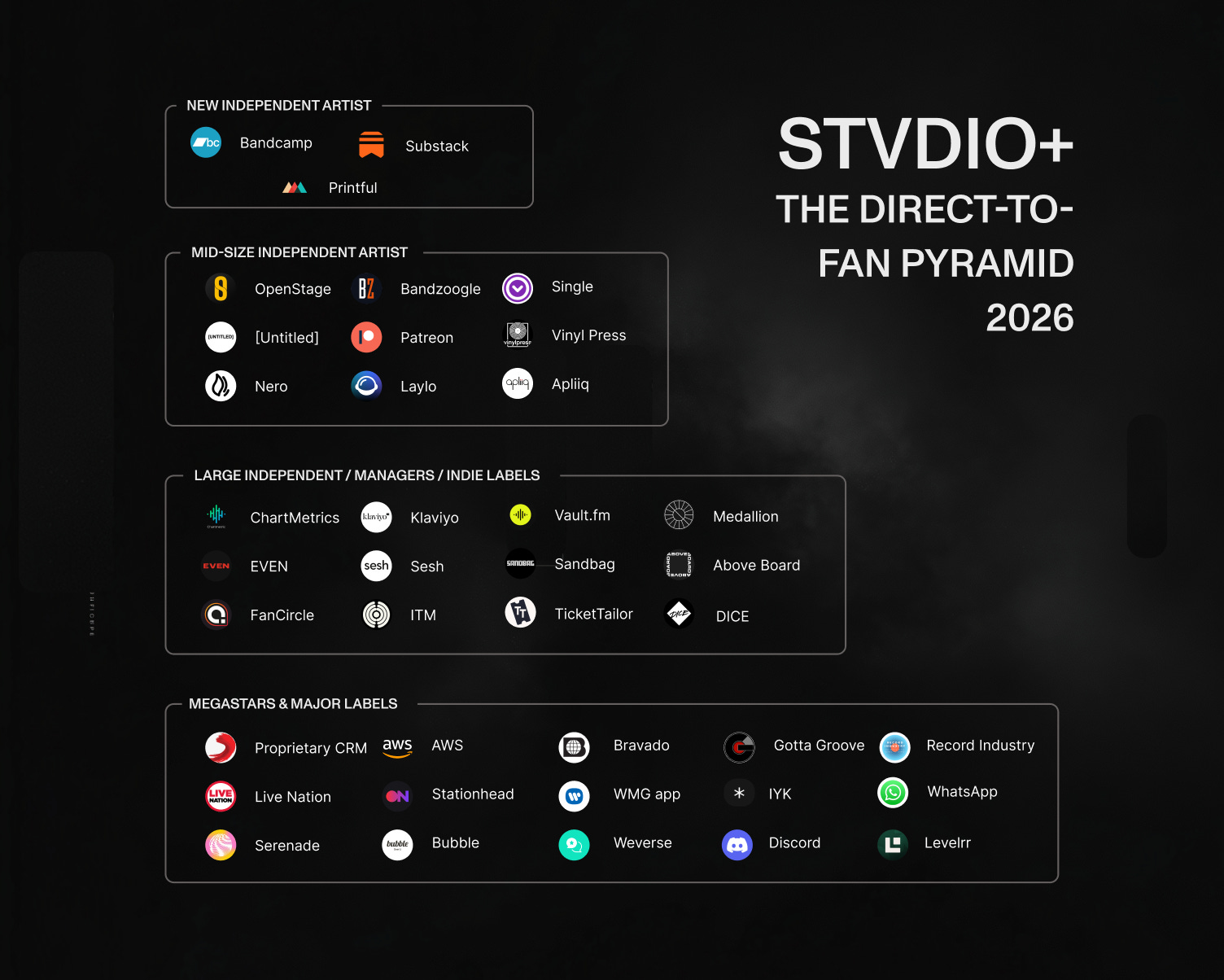
Benjamin identifies four levels of musical artist by reach: New Independent, Mid-Size Independent, Large Independent and Megastar.

Let’s explore the first level, the one I think maps best to the indie filmmaker experience.

He says,

“It is extremely important to start collecting emails and offering basic digital products. This is your foundation for owning your audience from day one.”

Bandcamp, Substack and Printful are the three services he suggests to beginning musicians.

What might the equivalent services be for indie filmmakers?

MUSIC SERVICE FUNCTION INDIE FILM SERVICE
Bandcamp Rudimentary Distribution, Email Collection, Album and Merch Sales VimeoYouTubeGumroad?
Substack Newsletter, Email Collection Substack?
Printful Merch Fulfillment Sellfy?

Where is the Netflix for Short Films? Itch.io perhaps?

Filmmakers, what’s working for you?

My take: hey musicben, how is SIX doing? We need something like that for indie films, especially shorts that mostly have zero commercial potential. Does thinking about shorts as tracks and feature films as albums spark any ideas for you?

Are Canadian movies getting better?

On Canada Day 2026 Barry Hertz, Deputy Arts Editor and Film Editor of the Globe and Mail, offered his highly subjective list of The 100 best Canadian films ever made. (Article is behind a paywall.)

It’s a fascinating, personal countdown of 100 films spanning the last 60 years. From the article:

“These are movies that inspire, transfix, beguile and enthrall – stories that build a culture, one which can never be broken, subsumed or offered up as a bargaining chip. And they only exist because we all put our money where our mouths are, investing in many of them through Canada’s publicly funded arts institutions.”

As proxies for the Canadian National Cinema, let’s analyze this admittedly small data set.

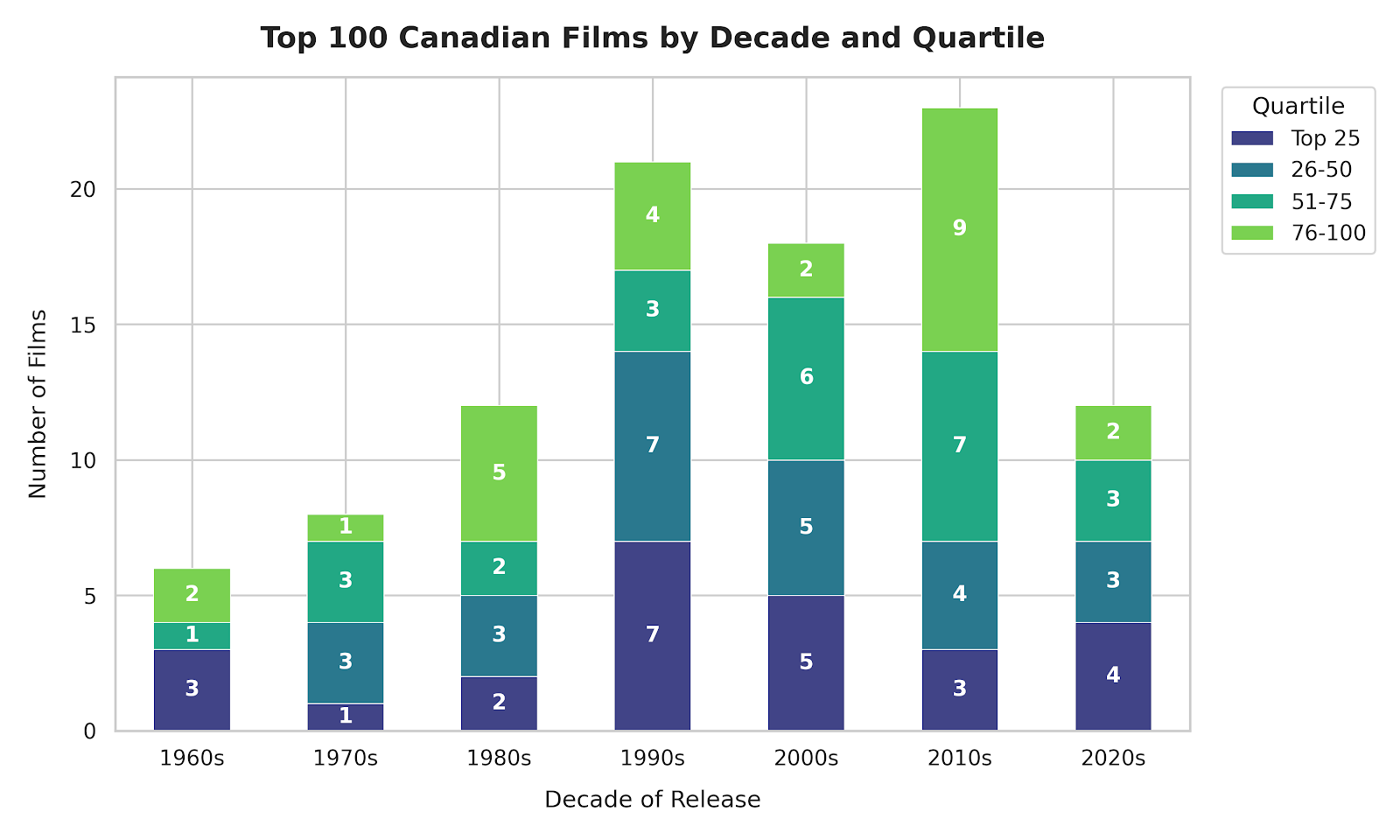
The 1990s and 2000s feature almost half of Barry’s top 25 picks. The 2010s have the dubious distinction of being the decade with the most films in the bottom 50.

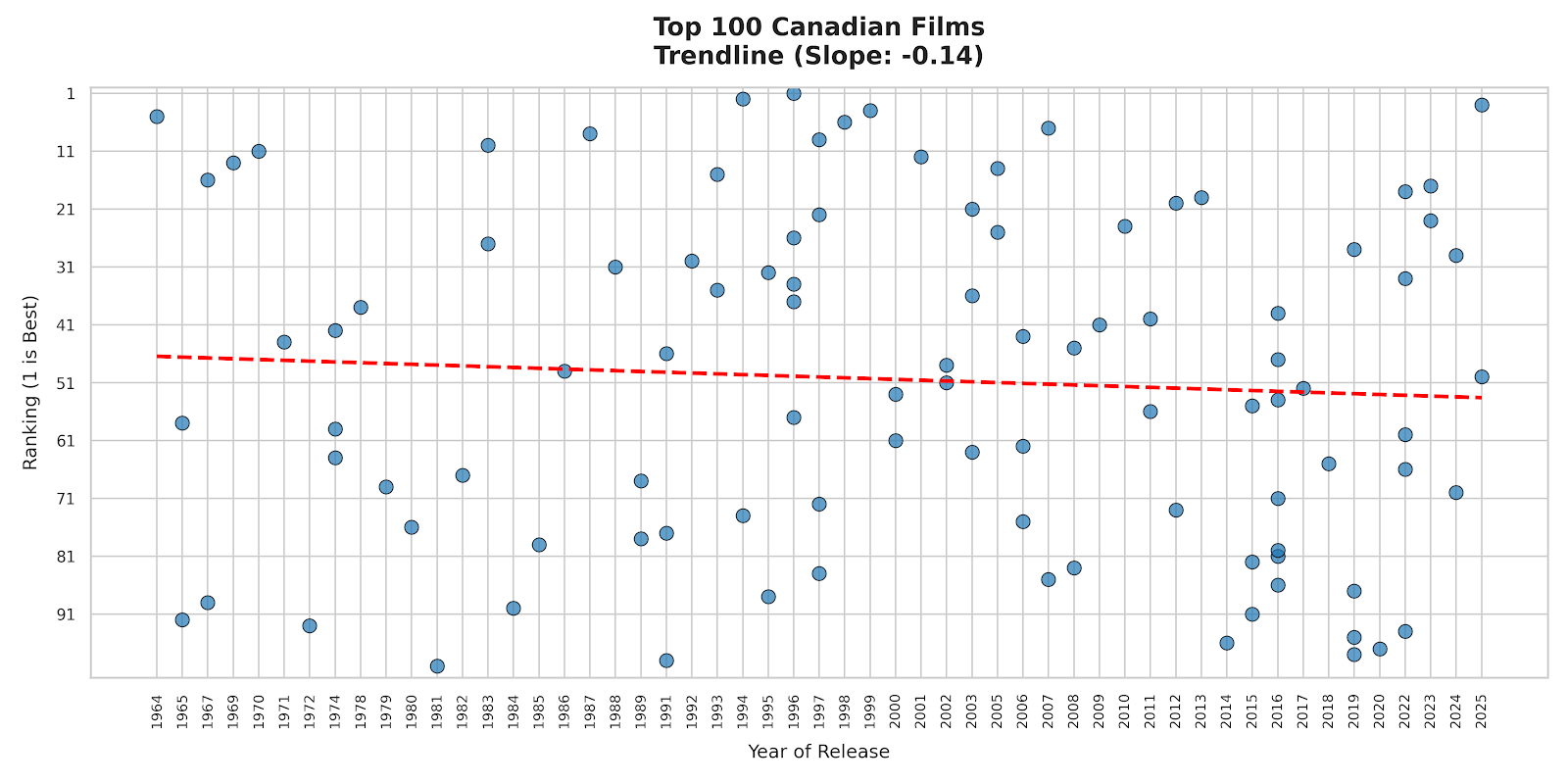
We would hope that the rankings of our Canadian National Cinema would steadily improve each year, but unfortunately, the data shows a slight decline over time. This adds credence to the feeling that Canadian films used to be better.

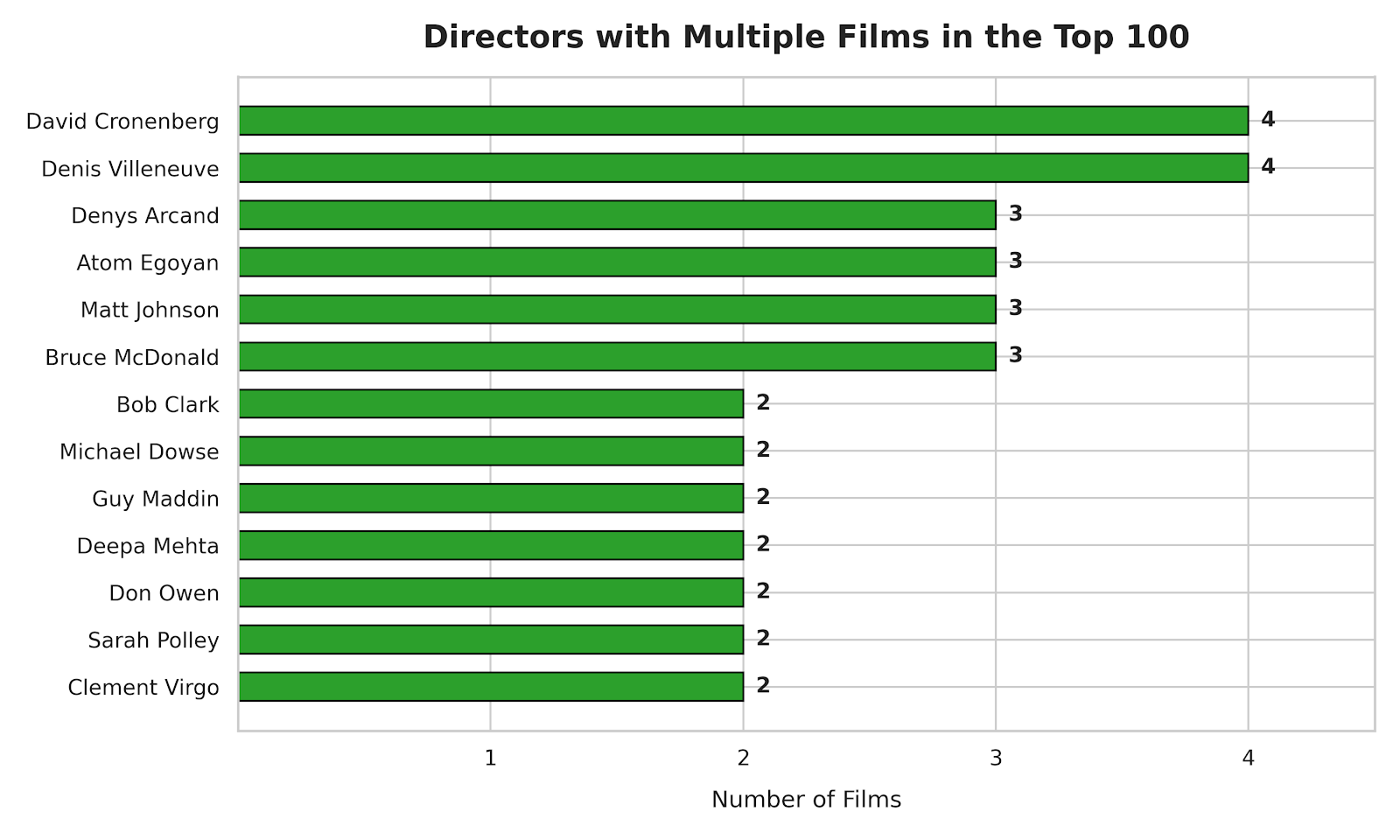
Fascinatingly, 13 directors (out of 79) are responsible for more than one third of Barry’s 100 choices. Sadly, only two of these are women.

My take: we can do better. Cineplex agrees.

The Audience First Playbook

Randy Greenberg of The Business of Entertainment: Unfiltered has posted “Creators and Filmmakers: You Don’t Need Permission” on Substack.

In it he analyzes the recent successes of Kane Parsons (Backrooms), Curry Barker (Obsession) and Mark Fischbach (Iron Lung).

He then extrapolates their trajectories to outline his “Audience-First Pipeline” ladder with these four rungs:

  1. “Build the audience through short-form content.
  2. Escalate the format progressively as the craft develops.
  3. Prove the concept at feature length.
  4. Walk into the negotiation with leverage, or skip the negotiation entirely.”

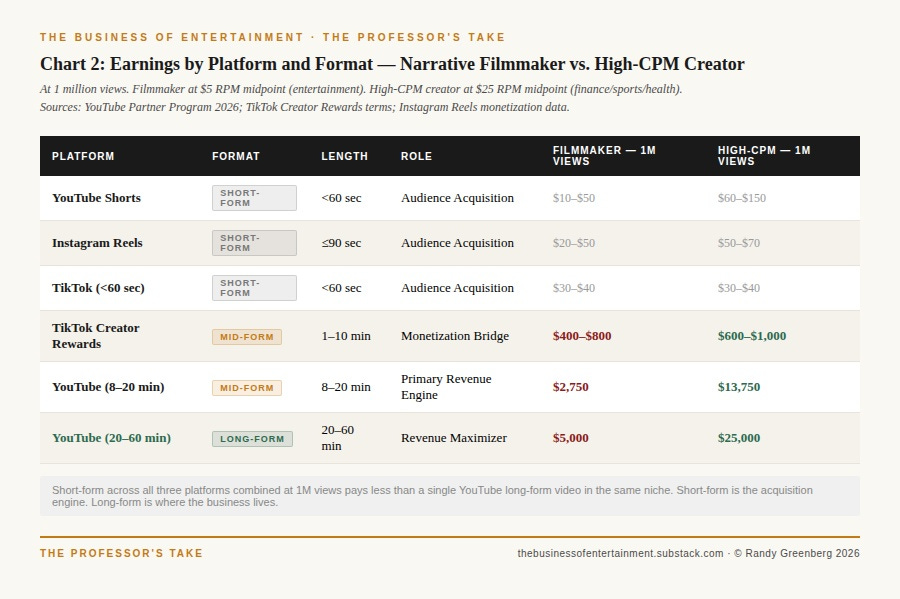
“The job in Phase One is not to make money. The job is to build the audience that funds everything that follows. Short-form content on these platforms is your audience acquisition infrastructure, dramatically cheaper than any traditional marketing budget. [Phase Two] The eight-minute floor on YouTube is the first structural breakpoint. Mid-roll ads unlock. [Phase Three] This is where the filmmaker stops renting the audience to platforms and starts owning the relationship. [Phase Four] When you arrive at a distributor with a built audience and a proven concept, you are not pitching. You are negotiating.”

In summary, “Short-form builds the audience. Mid-form pays the bills. Long-form is the revenue engine. Direct-to-audience is where you own the business.”

This post is so great you really owe it to yourself to read the whole thing!

My take: this is a great breakdown that codifies and quantifies the creator economy playbook. What’s so intriguing about this is that technology and digitization made it possible. Previously, the means of production for analogue media involved so many people and was so expensive that “success” was almost always granted by gatekeepers. Now your audience anoints you.