Hollywood is dead; long live filmmaking

On the heels of the Academy Awards, Bloomberg Originals has posted Why Hollywood is Facing a Very Unhappy Ending.

The short documentary explores the current downturn in the Los Angeles-based film industry, questioning if Hollywood is confronting a temporary or a terminal decline.

It outlines the economic crisis…

  • Production Slump: Shooting days in Los Angeles dropped 16% in 2025, falling roughly 50% below the 2017 peak.
  • Box Office Decline: US and Canadian box office receipts totalled $8.6 billion in 2025, a significant drop from the $12 billion reached in 2018.
  • Labor Impact: Employment in California’s motion picture industry, which peaked in 2016, was decimated by the pandemic and the 2023 actor and writer strikes. Approximately 41,000 workers left the industry between 2022 and 2024.
  • Streaming Losses: Major media companies poured billions into streaming services but are now pivoting toward profitability, leading to mass layoffs and fewer project greenlights.

…and blames it on technological and cultural disruption:

  • Artificial Intelligence: AI is viewed as an existential threat with tools now capable of recreating voices, faces, and movements.
  • Creator Economy: Platforms like YouTube and TikTok are capturing younger audiences.
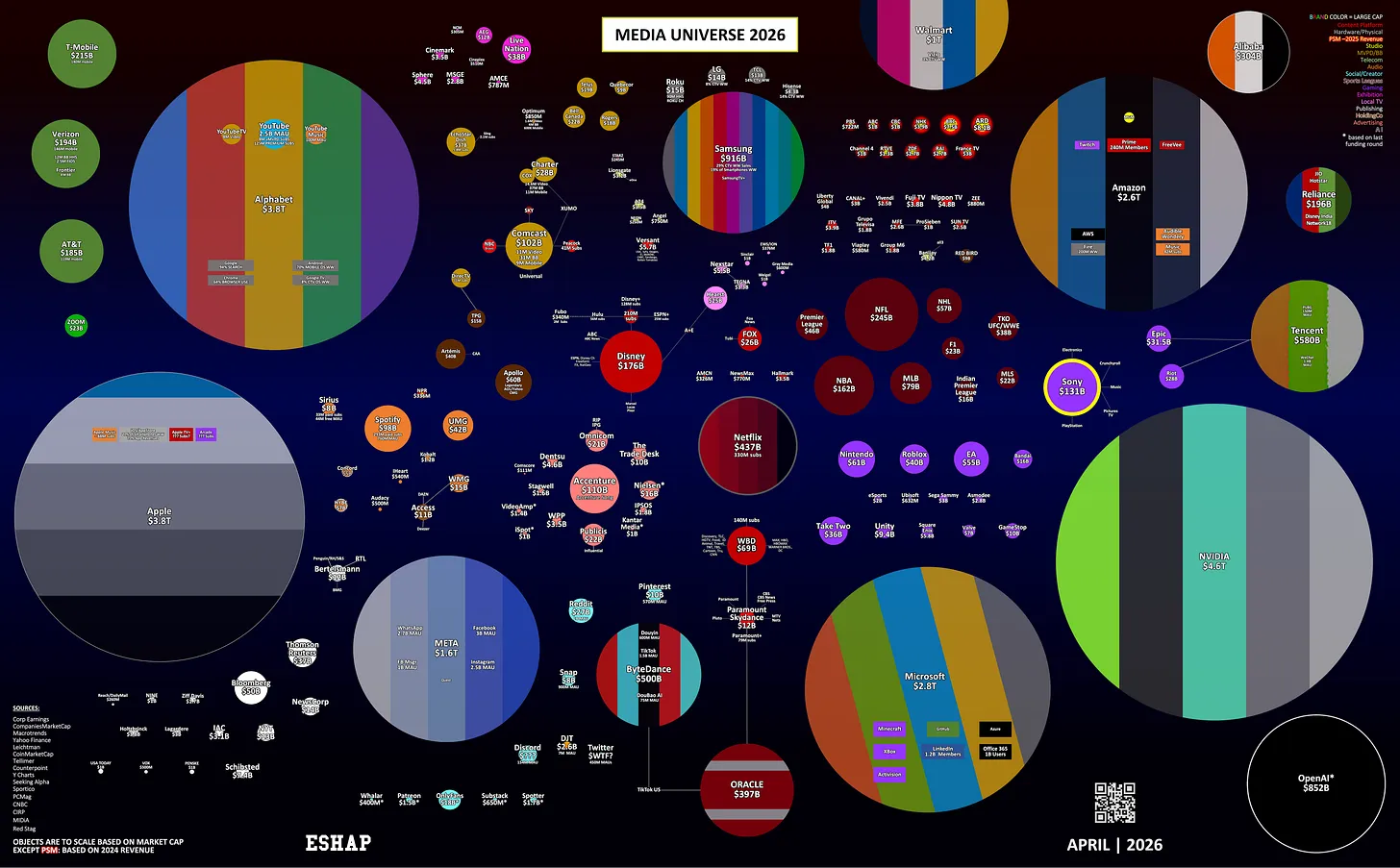
  • Consolidation: Aggressive mergers are accelerating as legacy media companies seek the scale needed to survive against tech giants.

Meanwhile, Dara Resnik, showrunner, writer, indie producer and educator, has posted For the Pragmatic F*cking Dreamers on Substack.

In it she outlines her survival strategy for filmmaking in Hollywood:

“1. The job (writing pilots/screenplays)
2. The hustle (pitching)
3. The work I own (making MY shit)
Most people in this industry are already doing at least two of these and feeling like that means they’ve somehow failed. I need you to know that it’s not just okay, it’s the strategy now. Here’s what it actually looks like to live inside this moment without either pretending it’s fine or giving up.”

She goes on to explain her creative life and raison d’être — well worth reading.

Dara, like the Bloomberg doc, believe that indie films are the future, what Ted Hope and others call NonDē or “non-dependent” or “non-dependent on the studio machine”, referring to a type of filmmaking that is self-driven, micro-budget, and community-powered.

My take: ah, those were the days, eh? By the way, Hollywood is still making films, just not in L.A. right now — check out the very last credits of any movie these days to see tax-payer dollars at work in Hollywood films from: Canada, British Columbia, Ontario, Quebec, Georgia, United Kingdom, Ireland, Australia, Spain, Malta, and on and on.

Netflix buys AI post-production company from Ben Affleck

Netflix has bought InterPositive, Ben Affleck‘s stealth AI post-production company.

From the media release:

“InterPositive’s mission — to use emerging technology in ways that protect and expand creative choice — is deeply aligned with Netflix’s long-standing belief that innovation should serve storytellers and the creative process.”

According to Variety:

“The InterPositive system builds an AI model based on an existing production’s dailies, then lets a filmmaker introduce that model into the postproduction process to provide the ability to do things like mix and color, relight shots, and add visual effects.”

Note that InterPositive owns a patent on technology that Ben invented called “Method, system, and computer-readable medium for training a captioner model to generate captions for video content by analyzing and predicting cinematic elements”. It describes systems designed for enhancing video content analysis and generation through cinematic element recognition and metadata utilization.

Price has not been disclosed.

My take: is this the beginning of Netflix turning into a “dream factory”? Imagine sitting down on the couch and prompting the movie you’d like to see. Or a spin-off with some of your favourite characters. Or — and I want this so much — “Yeah, this movie, but make it 90 minutes instead of two hours and forty-five minutes.”

How to watch the 2026 Oscar nominees for Best Picture

Where can you watch the 2026 Oscar nominees for Best Picture?

Rotten Tomatoes provides a handy list. And here are some sources for the Best Pictures in Canada:

Best Picture Nominee Where to Watch Link to Site Official Trailer
Bugonia Rent/Buy on Apple TV or Prime Rent on Apple TV Official Trailer
F1 Stream on Apple TV Watch on Apple TV Official Trailer
Frankenstein Stream on Netflix Watch on Netflix Official Trailer
Hamnet Rent/Buy on Apple TV or Prime Rent on Prime Video Official Trailer
Marty Supreme Rent/Buy on Apple TV or Prime Rent on Prime Video Official Trailer
One Battle After Another Stream on Crave Watch on Crave Official Trailer
The Secret Agent In Theatres / Rent/Buy on Apple TV Rent on Apple TV Official Trailer
Sentimental Value Stream on MUBI Watch on MUBI Official Trailer
Sinners Stream on Crave Watch on Crave Official Trailer
Train Dreams Stream on Netflix Watch on Netflix Official Trailer

My take: whatever you think of the Oscars, you have to agree they are the pinnacle of motion picture marketing.

The state of Canadian feature films in 2025

Telefilm Canada has released its annual report on moviegoing and distribution in Canada.

The trend continues to be dire.

Canadian films accounted for only $14M of $837M box office revenue, or just 1.7%.

That 1.7% doesn’t do justice to French-language films though, which garnered 13%, leaving Canadian English-language films at just 0.4%. Less than half of one percent!

(Telefilm does attempt to put a better spin on this by breaking out “independent films” from “major Hollywood productions”, but to no avail.)

Only three Canadian films made more than $1M revenue at the box office.

“The summer comedy Menteuse stood out, achieving box office revenue of over $2.6 million. The children’s films Ma belle-mère est une sorcière and Night of the Zoopocalypse round out this trio, both having generated box office revenue of over $1.1 million in Canada.”

The top ten films at the box office were all Hollywood productions.

“Of all the films screened in Canadian theatres, the feature film A Minecraft Movie, based on the popular video game, stood out with box office revenue of almost $45 million in 2025. This was followed by Jurassic World: Rebirth and Superman, which both surpassed $30 million. Apart from F1: The Movie, all the top ten titles were sequels or adaptations based on existing intellectual property.”

The figures are from the Movie Theatre Association of Canada.

Download the report here.

My take: I don’t begrudge Telefilm its $100M+ budget, but I submit that something is wrong with this picture. Either project selection is not taking the cinema-going audience in mind, or there’s not enough marketing happening, or both. If we truly want a national cinema and not just a feature film service industry for foreign producers, I can think of a few things that have to happen: a screen quota, lower budgets, a tax credit for film investors, a star system, a Canadian film media; all working together to create a meritocracy that makes movies Canadians want to watch in Canadian theatres, eh!

I love you — in movies!

Stephen Follows has launched a YouTube channel appropriately called The Film Data Scientist.

In honour of Valentine’s Day, his first post is I analysed every ‘I Love You’ in 72,000 movies.

Takeaways:

  • 55% of movies don’t say, “I love you.”
  • Romance, music and comedy films say it the most.
  • War, history and western movies say it the least.
  • The utterance is accepted more than rejected only if it’s spoken in the last 5% of a film.
  • “I love your ___.” Hair is the most popular fill in this blank.

My take: sure, it’s on the nose, but sometimes you just gotta hear it to believe it. I love you!

All-in-one platform Higgsfield

As you begin to explore generative video, you’ll probably quickly yearn for an all-in-platform that gives you access to most (if not all) of the best tools.

Enter Higgsfield. This video is a great overview and gives you a cheat sheet for both images and video as of February 2026.

There are a few features that make Higgsfield stand out.

Cinema Studio.

Apps.

My take: as still and motion imaging becomes easier than ever, what still remains most important is a great story.

Still on the fence about AI-generated video? Watch this!

Tim Simmons of Theoretically Media gives us The Ultimate AI Video Starter Guide for 2026!

He starts off with a short history of AI-generated images and video. He then moves on to cover the main ways to create video today:

  1. Text to Video
  2. Image to Video
  3. Video to Video
  4. Ingredients to Video

He then reviews some image generators that you can use to create first frames and other ingredients:

  • Nano Banana Pro
  • Midjourney
  • Flux (Black Forest Labs)
  • SeeDream (ByteDance)

He then reviews some video generators:

  • Google Veo 3.1
  • Kling 2.6
  • OpenAI Sora 2
  • Runway Gen 4.5
  • Luma Labs Ray 3
  • SeeDance (ByteDance)

He even mentions three platforms that bring all the tools together under one roof:

  • Freepik
  • Higgsfield
  • Flora

This is the best 18 minutes you’ll spend on YouTube today!

My take: there is skill involved in each component of this creative workflow. I think we are passed the point of ignoring these tools.

Can the Ethos Equity Model Finance Indie Films?

Jason Hellerman of No Film School interviews Ariel Heller and Sam Baron about financing in How ‘Circles’ Is Using Radical Transparency and an Equity Model to Build an Indie Feature.

Jason quotes Ariel:

“In the traditional finance model, indies rely on underpaid labor, opaque accounting, and the promise of exposure that rarely materializes into real participation. Whereas in this equity model, everyone from director to PA works for the same rate (a competitive indie wage pegged to the SAG minimums) in exchange for equity. Most crews never see a budget, never understand a waterfall, and never receive a dollar after wrap. By opening the books, educating collaborators on the model itself and giving access to budgets and cap tables, we remove the suspicion that has defined so much of the industry. Transparency builds confidence, and confidence builds better work.”

Their inspiration comes from Clint Bentley and Greg Kwedar. See their Ethos Equity Financing Model.

See Wrapbook to understand traditional Equity Financing.

My take: I like the thought behind this. Using “set time” to determine equity gets everyone in the game, however, it also devalues intangibles like a screenwriter’s years of rewrites, a cinematographer’s film school debt and an actor’s clout. To make this work, I think you’d have to assign in-kind value to these and other intangibles and add this to the Investor side. Then 60/40 to 120%, followed by 50/50 could make sense. Basically, this model has craftspeople in front of and behind the camera share 40% of all income from the first dollar, distributed by time worked, hopefully rising to 50% at some point.


Write a commercial spec script, please!

Franklin Leonard of The Black List makes The Moral Case for “Selling Out”.

Read the full post because it’s guaranteed to get your fired up for 2026. Leonard starts with:

“If you’re an aspiring professional screenwriter and you want this to be your job, write a commercial spec script.”

By commercial, he means something real audiences will pay to watch.

He then goes on to ask nine questions you must answer before you spend your limited time and energy on a script:

  • Can you make a busy person want to read it in a single sentence?
  • Is it in a genre lane with an engine?
  • Does your protagonist want something visible and external?
  • Do you have a “big bad?”
  • Do you have a ticking clock?
  • Do the stakes escalate?
  • Do you have set pieces?
  • Do you land the plane?
  • Is it yours?

He concludes with this exhortation:

“Earnest as it may be, I still believe that a popular movie, done right, is a small act of care at a global scale. Look around. The world out there is rough right now for almost everyone. If you can help people set down whatever they’re carrying for two hours and, as Miyazaki puts it, “find unexpected admiration, honesty, or affirmation in themselves, and… return to their daily lives with a bit more energy,” there’s absolutely nothing soulless or frivolous about that.”

My take: I agree log lines are very important. Roger Corman would start with the poster. In both cases, they represent the concept of your story: the sum of character, plot, setting, conflict, and theme. This is the DNA of the work — choose carefully.

Your 2026 Roadmap to Success

Ah! It’s a new year! 2026! How to not only survive, but to thrive? You need a plan.

Elliot Grove of Raindance offers 7 Ways Writers, Directors, Actors & Producers Can Actually Survive 2026.

You should read his post yourself but here’s the TLDR:

  1. Build an Audience Before You Need One
  2. Create Assets, Not Single Projects
  3. Use AI as a Lever — Not a Crutch or a Threat
  4. Diversify Your Income Into Three Lanes
  5. Work in Public — and Make Repetition Your Religion
  6. Build Collaborative Triangles — Not Industry Contacts
  7. Develop the 7 Soft Skills That Will Matter More Than Talent

He concludes with this:

“The Good News: 2026 Favors the Brave

  • Yes, the industry is shifting.
  • Yes, synthetic performers exist.
  • Yes, freelancers are absorbing the shocks.
  • Yes, budgets are a rollercoaster.

But there has never been a better time to be an independent filmmaker.

  • Never easier to reach audiences.
  • Never easier to build IP.
  • Never easier to experiment.
  • Never easier to collaborate globally.
  • Never easier to launch a career without asking permission.”

My take: if you want a roadmap to success in these turbulent times, Elliot’s advice is very much worth considering. Bonne chance!