Canadian film and TV tax credits average $22,000 per position

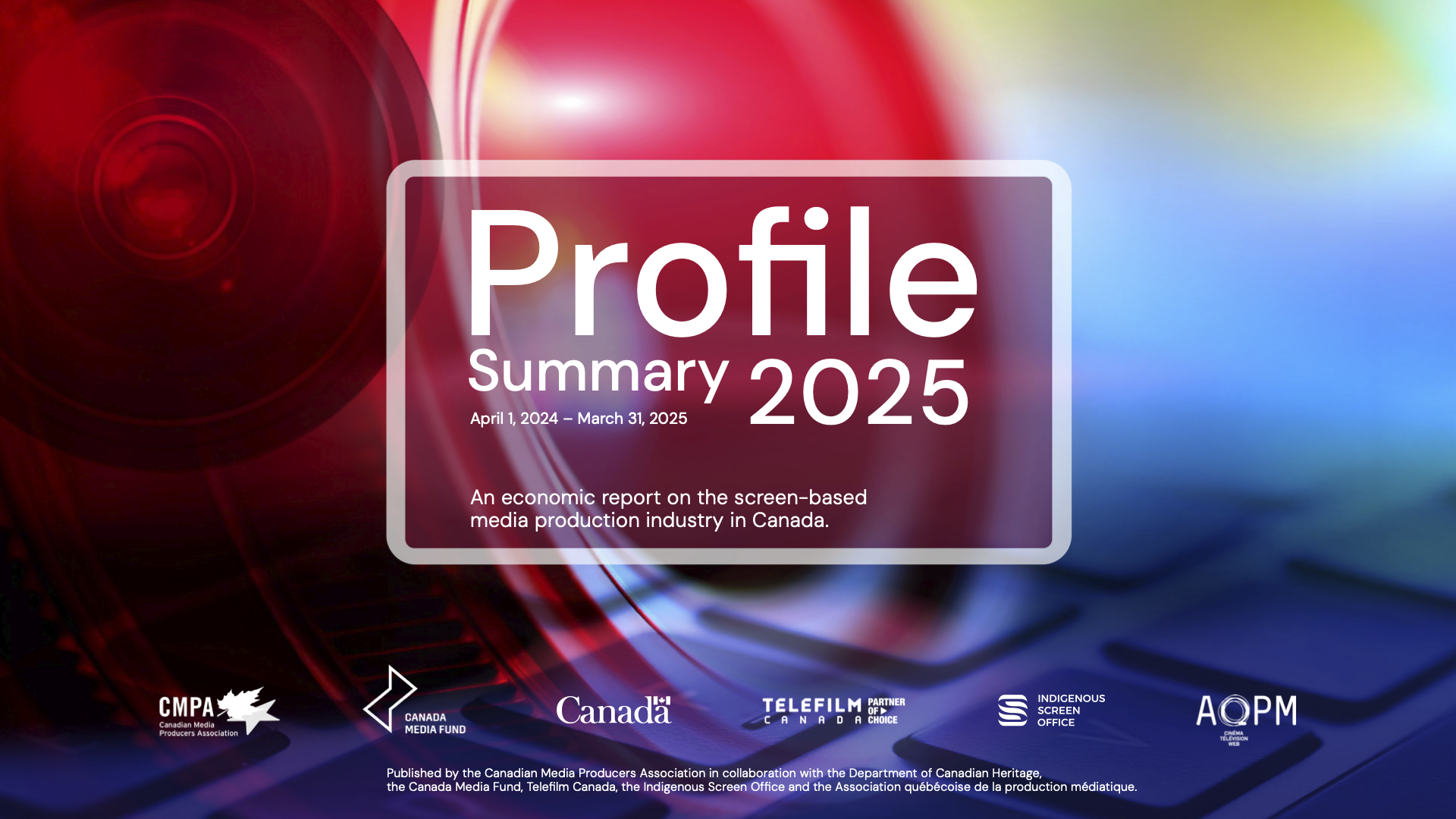
The Canadian Media Producers Association has just released Profile, its annual economic report on Canada’s screen-based production industry.

“The film and television production industry in Canada generated nearly $10.2 billion in production volume in the 2024/25 fiscal year, contributed nearly $12 billion to the country’s GDP, and supported 181,360 jobs.”

Some takeaways:

  • BC led the country in foreign location and service (FLS) production.
  • 97,920 jobs (54%) were in foreign location and service (FLS) production.
  • Ontario led all other categories.
  • Canadian theatrical feature film production decreased by 3.2% to $460 million.
  • 58% of Telefilm-funded Canadian theatrical feature films had budgets of $2.5M or higher.
  • Canadian films’ share of the Canadian box office decreased from 3.3% in 2023 to 2.8% in 2024, and then to 1.7% in 2025.

Section 7.5 is very revealing:

In 2024/25, the federal and provincial governments in Canada provided an estimated $2.15 billion in refundable production services tax credits to FLS production. This included $560 million from the federal government’s Production Services Tax Credit (PSTC) and $1.59 billion from provincial government production services tax credits and rebates for FLS productions.”

Doing some basic math, if we divide these tax credits by the 98,000 jobs in FLS production, we get approximately $22,000 per position.

Download the summary slides.

My take: “Canadian content consists of Canadian television and theatrical feature film.” Bundling Canadian content like this buries the dismal state of Canadian Film, which is basically a rounding error in total box office revenue. See How to fix Canadian Film.

How to fix Canadian Film

National Canadian Film Day is April 15, 2026Find a free screening in your town.

If you don’t go, you might be one the 40% of Canadians who haven’t seen a movie in a cinema in over a year. (And that’s for any film from any country.)

So how do we fix Canadian Film?

Annelise Larson thinks there are 5 Things Wrong with the Canadian Film Industry (& How to Fix Them):

“1. Movies are expensive to make. The fix: Smaller movies with smaller budgets ($1 million to $100K or less) would allow more movies to get made each year.

2. Canadian films are not Hollywood filmsThe fix: Small films can dream big but need to think strategically small…and deep. This means niche audiences and niche marketing.

3. Not enough investment in audience development & marketingThe fix: Filmmakers should budget at least 10% of their production budget for marketing.

4. Filmmakers don’t know their audienceThe fix: Think about your audience and learn who they are. Part of this is understanding and targeting relevant niches.

5. There is little sharing of data among filmmakersThe fix: Success needs to be redefined for the industry. It is more than box office and awards.”

Get this — that post is from September 8, 2015. Over 10 years ago and nothing has changed.

My take: I’m more hopeful for Canadian Film today than I have been in a while simply because of the degree to which service work has dried up. Here’s how I would fix Canadian Film:

  • Enact a Screen Quota for Canadian Distributors.
  • Approve Three Comedy, Action and Romance films for every Drama or Documentary.
  • Use smaller budgets to create shorter films, i.e. 90-105 minutes.
  • Mandate one 10 minute Canadian short before every feature.
  • Encourage the media to create a meaningful Canadian star system.
  • Gradually replace government funding with 100% tax write offs.

With these changes and others, hopefully we can celebrate Canadian Film for more than one day a year.

Indie filmmakers need the email addresses of their superfans

Joel Gouveia of The Artist Economy published “The Death of Spotify: Part II” on Substack that I think has a way forward for indie filmmakers.

Although he’s talking about the music business using an analogy of music as water, his thesis applies to film as well:

“Because music has been commodified to zero, managers and artists can no longer survive selling tap water. We need to focus on selling Fiji water to superfans, while letting the tap water exist for the masses.”

Because Spotify is central to the dominant musicverse, he asks:

“Why does Spotify force artists to use Laylo for texting, Discord for community, and Patreon or Substack for subscriptions? Why do we need to build communities on other platforms?”
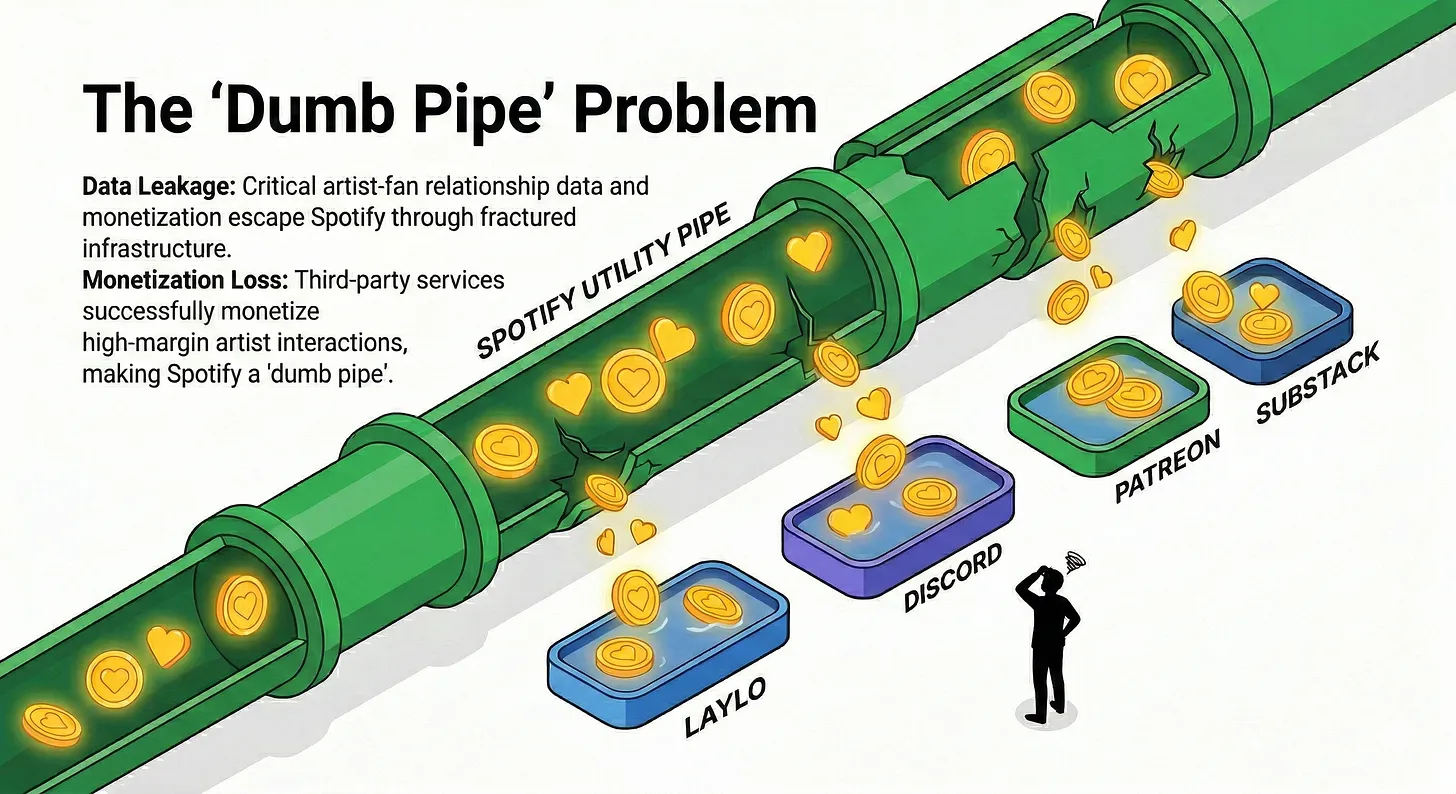
He holds that the key to servicing your superfans is to get their email addresses asap.

Then you can add value to your relationship and offer them the opportunity to buy:

  • Merch like DVDs, posters, scripts, t-shirts, etc.
  • Access like IRL watch parties, hanging out before screenings, etc.

Joel believes, “1,000 passionate fans is a business model.

My take: thanks, Joel, for cutting through the technology and reminding us of the fan clubs that early bands used to build community. Here’s an AI Overview (and keep in mind you probably made a bunch of this merch for your Kickstarter/Indiegogo/Seed&Spark campaign):

Indie filmmakers with a dedicated email list of superfans can move beyond traditional crowdfunding to sell high-margin merchandise that fosters community and brand loyalty. The most successful merchandise for indie film is often creative, thematic, and in limited supply, rather than simple branding.

Here are the types of merch indie filmmakers sell to superfans:

  1. Apparel (Beyond the Simple T-Shirt)
    * Superfans want to wear gear that looks stylish and acts as a “niche signal” to others who know the film.
    * Embroidered Sweatshirts and Hoodies: Premium, cozy items that look higher quality than screen-printed tees.
    * Thematic Caps & Hats: Specifically, items featured in the film (e.g., a “First Reformed” denim hat) or “dad hats” with a subtle logo or quote.
    * Unique Streetwear: Limited-run clothing collaborations (e.g., A24 style) that feel exclusive.
  2. High-Value Physical Media
    * Fans willing to sign up for emails often care about building a personal film library.
    * Signed/Limited Edition Blu-Rays or DVDs: These command a higher price point than standard digital rentals.
    * Vinyl Soundtrack Albums: A popular, collectible, and high-quality item for cinephiles.
  3. “In-World” Collectibles & Props
    * Items that feel like they were taken directly from the set are highly valuable to superfans.
    * Signature Items: Replicas of specific items, such as the hot dog fingers from “Everything Everywhere All At Once”.
    * “Prop” Apparel: Clothes worn by characters in the movie.
    * Trading Cards: Cast members and key scenes, particularly effective for genre films.
  4. Collector’s Art & Paper Goods
    * Posters with Alternative Artwork: Collectors often prefer artistic, limited-edition screen prints over the standard theatrical poster.
    * Handmade Zines/Behind-the-Scenes Books: A “making-of” booklet, script excerpts, or personal notes from the director.
    * Stickers and Pins: These are popular, inexpensive to ship, and allow fans to customize their own gear.
  5. High-End & “Superfan” Experiences
    * Once you have direct email access, you can offer experiences that are impossible through mass-market retailers.
    * Producer Credits/Naming Rights: Listing a fan in the credits of the next project.
    * Private Screenings or Virtual Q&As: A “Zoom-with-the-director” session for top supporters.
    * Virtual or Physical “Experiences”: A top-tier package might include having a character in the next film named after the fan, or a 1-on-1 acting workshop with the lead actor.
  6. Functional & Daily-Use Items
    * Custom Mugs & Tumblers: Enamel mugs are popular for creative, cozy designs.
    * Tote Bags: A functional item with a strong graphic design.
    * Unique Tech Accessories: Phone cases or USBs with the movie’s soundtrack pre-loaded.

Strategy: The “Email” Advantage
With email, indie filmmakers should focus on limited-edition drops rather than always-in-stock items. This creates urgency.

Postcard Method: At festivals, handing out postcards with a QR code that leads to an exclusive, mobile-friendly merch store.

Bundling: Combining the movie, a poster, and a t-shirt into a single “superfan” package increases the average order value.


Can the Ethos Equity Model Finance Indie Films?

Jason Hellerman of No Film School interviews Ariel Heller and Sam Baron about financing in How ‘Circles’ Is Using Radical Transparency and an Equity Model to Build an Indie Feature.

Jason quotes Ariel:

“In the traditional finance model, indies rely on underpaid labor, opaque accounting, and the promise of exposure that rarely materializes into real participation. Whereas in this equity model, everyone from director to PA works for the same rate (a competitive indie wage pegged to the SAG minimums) in exchange for equity. Most crews never see a budget, never understand a waterfall, and never receive a dollar after wrap. By opening the books, educating collaborators on the model itself and giving access to budgets and cap tables, we remove the suspicion that has defined so much of the industry. Transparency builds confidence, and confidence builds better work.”

Their inspiration comes from Clint Bentley and Greg Kwedar. See their Ethos Equity Financing Model.

See Wrapbook to understand traditional Equity Financing.

My take: I like the thought behind this. Using “set time” to determine equity gets everyone in the game, however, it also devalues intangibles like a screenwriter’s years of rewrites, a cinematographer’s film school debt and an actor’s clout. To make this work, I think you’d have to assign in-kind value to these and other intangibles and add this to the Investor side. Then 60/40 to 120%, followed by 50/50 could make sense. Basically, this model has craftspeople in front of and behind the camera share 40% of all income from the first dollar, distributed by time worked, hopefully rising to 50% at some point.


Write a commercial spec script, please!

Franklin Leonard of The Black List makes The Moral Case for “Selling Out”.

Read the full post because it’s guaranteed to get your fired up for 2026. Leonard starts with:

“If you’re an aspiring professional screenwriter and you want this to be your job, write a commercial spec script.”

By commercial, he means something real audiences will pay to watch.

He then goes on to ask nine questions you must answer before you spend your limited time and energy on a script:

  • Can you make a busy person want to read it in a single sentence?
  • Is it in a genre lane with an engine?
  • Does your protagonist want something visible and external?
  • Do you have a “big bad?”
  • Do you have a ticking clock?
  • Do the stakes escalate?
  • Do you have set pieces?
  • Do you land the plane?
  • Is it yours?

He concludes with this exhortation:

“Earnest as it may be, I still believe that a popular movie, done right, is a small act of care at a global scale. Look around. The world out there is rough right now for almost everyone. If you can help people set down whatever they’re carrying for two hours and, as Miyazaki puts it, “find unexpected admiration, honesty, or affirmation in themselves, and… return to their daily lives with a bit more energy,” there’s absolutely nothing soulless or frivolous about that.”

My take: I agree log lines are very important. Roger Corman would start with the poster. In both cases, they represent the concept of your story: the sum of character, plot, setting, conflict, and theme. This is the DNA of the work — choose carefully.

The numbers behind Telefilm’s Talent to Watch 2025-26 projects

Telefilm Canada has selected 17 Talent to Watch projects to share $3.45 million from 155 submissions.

It’s quite revealing to look at the numbers in detail.

Let’s start with Type.

Narrative 9
Documentary 8

The Narrative features break down thusly:

Drama 6
Romantic Comedy 1
Sci-fi, Fantasy and Fairytale 1
Suspense 1

Province?

Quebec 7
Ontario 6
British Columbia 2
Saskatchewan 1
Yukon 1

Let’s look at Language next.

English 6
French and English 2
English and Cree 1
English and Filipino 1
English and Irish 1
English and Kannada 1
English, French and Korean 1
French 1
French and Spanish 1
French, English and Spanish 1
Japanese 1

And let’s finish up with Stream.

Filmmaker Apply-Direct 11
Industry Partner 4
Festival 1
Indigenous 1

In addition, if Gender is assumed from names:

Female approx. 20
Male approx. 18

Some observations:

  • The number of submissions is about the same as last year.
  • Non-fiction continues to be almost as successful as Fiction.
  • Drama is the most popular narrative genre.
  • Almost all of the successful projects are from Quebec and Ontario.
  • Almost half of the successful projects include other languages in addition to English and/or French — and one is in Japanese exclusively.
  • The vast majority of successful projects continue to be Filmmaker Apply-Direct.
  • Less than a quarter of the successful projects are from Industry Partners.
  • For the first time, two projects are helmed by one individual filling the director, screenwriter and producer roles, rather than a team of two or more.
  • For the second year in a row, no projects are selected from Atlantic Canada.

Hey, Atlantic Canada, what gives?

My take: this is the fourth year that filmmakers could apply directly and Telefilm has rewarded them well! Therefore, if you can apply direct, bypass your local industry partner, for odds of approximately one in nine.

Funding + Screening, together now

Brian Welk reports on IndieWire that From Film Funding to Distribution, This Partnership Gives You Control: ‘Anyone Can Do This’.

The partnership in question is between Seed&Spark and Kinema.

Unlike other crowdfunding platforms Seed&Spark is purpose-built for film & TV projects. They have a phenomenal 82% success rate.

Kinema is a tech platform that enables non-theatrical exhibition — what you may call grassroots screening tours — of films in person and online. We make it easy and rewarding for anyone, anywhere to organize moving showings and share in the proceeds.”

Brian states:

“Those who fund programs on Seed&Spark get a dedicated Kinema account manager and custom distribution consultations. Fees are waived for filmmakers with over 500 followers or over 1,000 campaign backers.”

But hey, if you want to DIY, at least check out their free online resource The Distribution Playbook.

My take: well worth further investigation!

Telefilm 2023-2024 Annual Report: Talent Fund analysis

Telefilm Canada has released its 2023-2024 Annual Report. Over the next weeks, I’ll dig deeper. This week: the Talent Fund.

Telefilm links the Talent Fund with Talent to Watch, its first feature program. They report:

  • “Through the generosity of its donors and partners from across Canada, the Talent Fund raised $270,600.”
  • The Talent Fund invested $300,000 towards the $3,600,000 invested in 18 first features in 2023.
  • “In total, the Fund financed 7% of the Talent to Watch program in 2023-2024.”
  • “The Talent Fund has a balance of close to $50,000.”

You can read the full annual report here.

My take: as a Certified Independent Production Fund, the majority of the Talent Fund‘s past funding came from “CRTC tangible benefits” from major Canadian media companies and other media funds; private donations continue to be minimal and fund perhaps two documentaries a year, or one+ narrative feature films. The allocation of some of the new online streaming tax to the Talent Fund will be critical for its continued existence. See The Path Forward.

Drama is not selling

Naman Ramachandran reports on Variety that Sales Agents Shift Away From Drama Films Amid Market Challenges: ‘It’s Led Us to Diversify Our Slate’.

“The global appetite for drama films has significantly diminished, according to a panel of international sales agents at the BFI London Film Festival.”

He quotes Sophie Green, head of acquisitions and development at Bankside Films, as saying: “The big sort of takeaway at the moment from the market is anything but drama. That really is kind of like double underlined everywhere that we go.”

Drama has become increasingly difficult to finance and sell, leading to a shift toward genre films and comedies.

My take: the pendulum swings this way and then that way. Dramas will be back, but perhaps they demand too much empathy from audiences just right now.

The numbers behind Telefilm’s Talent to Watch 2024-25 projects

Telefilm Canada has selected 17 Talent to Watch projects to share $3.45 million from 150 submissions.

It’s quite revealing to look at the numbers in detail.

Let’s start with Genre.

Documentary 8
Drama 4
Science Fiction/Fantasy 3
Drama-Comedy 1
Thriller 1

Province?

Quebec 7
Ontario 7
British Columbia 1
Alberta 1
Manitoba 1

Let’s look at Language next.

English 9
French 3
English/Sudanese Arabic 1
Portuguese (Azorean dialect)/French/English 1
French/English/Algonquin 1
French/English 1
French/Creole 1

And let’s finish up with Stream.

Filmmaker Apply-Direct 11
Industry Partner 3
Festival 2
Indigenous 1

In addition, if Gender is assumed from names and excluding Executive Producers:

Female approx. 25
Male approx. 15

Some observations:

  • The number of submissions rose almost 20% from last year.
  • Non-fiction continues to be almost as successful as Fiction.
  • Almost all of the successful projects are from Quebec and Ontario.
  • Almost one third of the successful projects include world languages in addition to English and/or French.
  • The vast majority of successful projects continue to be Filmmaker Apply-Direct.
  • Less than 20% of the successful projects are from Industry Partners.
  • Women far outnumber men and other expressions of gender.
  • No projects are selected from Atlantic Canada.

The cynical might posit that Telefilm’s Talent to Watch program continues to compensate for the broader industry.

My take: this is the third year that filmmakers could apply directly and Telefilm has rewarded them well! Therefore, if you can apply direct, bypass your local industry partner, for odds of approximately one in nine.