How to add value as a Producer

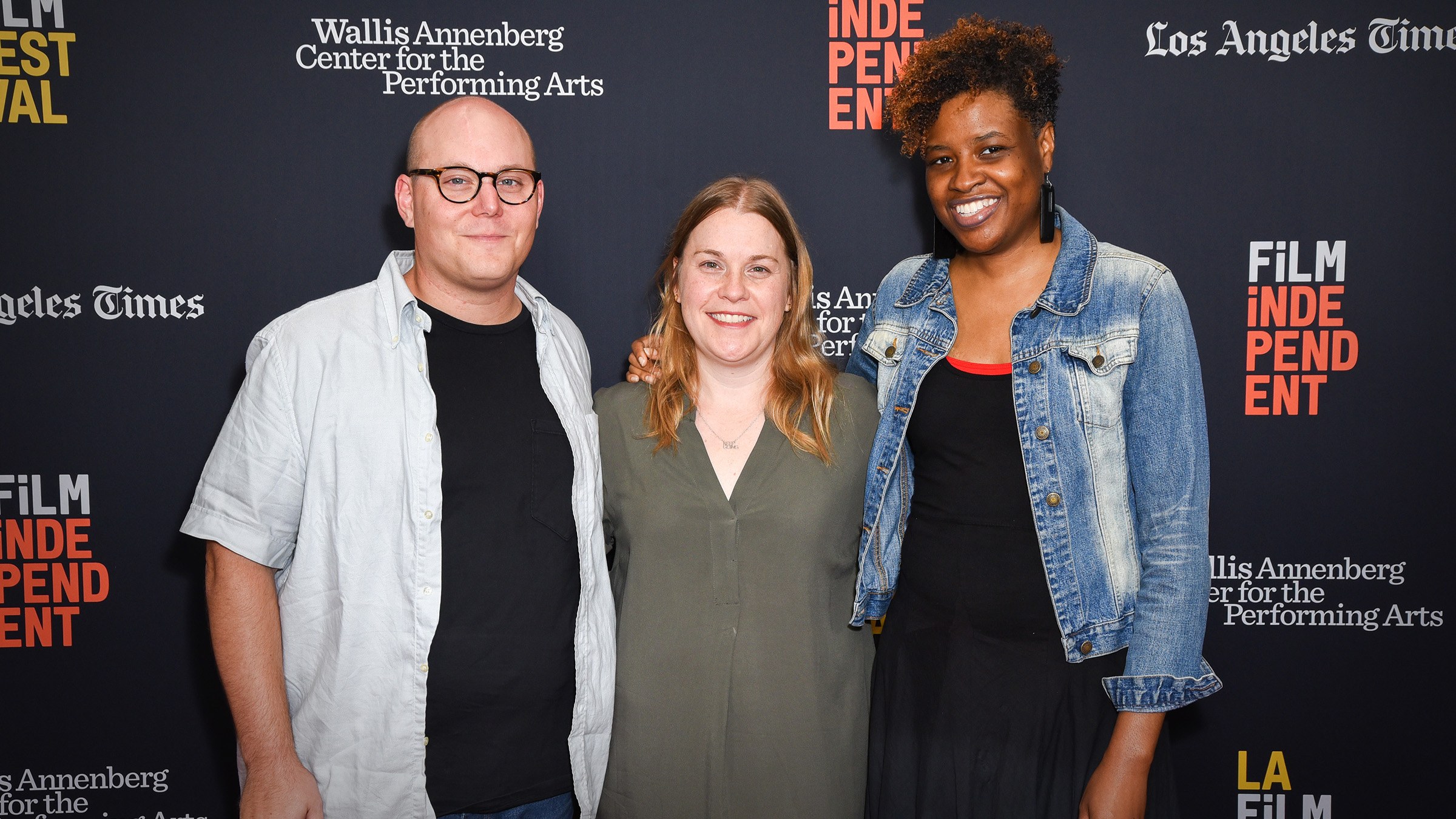
Su Fang Tham, writing on Film Independent, summarizes a recent panel at the LA Film Festival called “The Future of Producing” that offered invaluable advice and insight.

Rebecca Green (whose Dear Producer website is gold) moderated; panelists were Avril SpeaksLacey Leavitt and Steven J. Berger.

There are four interesting questions:

  1. What do you look for in a project?
  2. What is it do you think that audiences want?
  3. Why aren’t more producers creating a contingency plan for when their film doesn’t get distribution out of a festival?
  4. How do you build a producing career so that you’re not relying on directors to generate your next project and you’re creating your own path?

And the answers are just as interesting. Some great takeaways:

“Finding something with a unique voice is so important. What’s going to cut through all the noise and make it undeniably different from everything else? You really need to run your elevator pitch by real people — your grandmother, friends and family. If the other person isn’t freaking out about how awesome your idea is, you should ask yourself: am I going to devote the next five-plus years of my life to this? (Berger)”

“One question I always like to ask the filmmaker is, ‘Where’s the movie?’ Meaning: ‘Where is the entertainment value?’ Filmmakers are very passionate about their movie being personal to them, but they often miss the mark of why that should matter to anybody else. In order for an audience to care about your particular story, you also need to make sure it is entertaining. (Green)”

“We decided early on with Sadie that we wanted to set aside some money for P&A regardless of who we could get for distribution. We’ve been down this road before many times, with previous films, where certain distributors apply the same blanket distribution strategy without doing anything different to market individual films. There’s so much you can do on your own now in terms of targeting on social media and reaching your audience. (Leavitt)”

But the best takeaways for me were:

“As Summer Shelton wrote about for Dear Producer, just like you need to plan out your life, you need to ‘produce’ your career and think about what you want to be doing. My production company has been producing some VR films, and it’s been bending my brain in all sorts of great ways and it’s paying me. I’m also doing some pilot dramas for TV. So you have to produce your own career, not just your films. (Leavitt)”

“I’ve gone back to my early days as a development executive and have been digging for great material, mostly books, to bring to filmmakers rather than waiting for them to bring something to me. I often hear filmmakers complain that their agent never sends them anything good so I’m spending time getting to know the filmmakers I’d love to work with and hearing what kinds of stories they want to tell and then I go out and find it. Don’t wait for filmmakers to bring material to you — seek it out yourself. (Green)”

Along similar lines, the Canadian Media Producers Association has released an equity investment guide that goes beyond project funding. Profiled are six investments, from Love Money to IPO.

My take: I’ve been so focussed on projects, this is a bit of a revelation to me.

How to begin marketing before pre-production

Elliot Grove of Raindance proposes that you begin marketing your next film before it’s even written.

Elliot starts by narrowing down who you should market to and where to find them. Then he lists five marketing techniques:

Posters

Elliot relates how Roger Corman reverse engineered his films.

“Roger is a morning guy. He would meet me in my London office with the morning British papers. Over a cup of coffee, he would tear out keywords and mash them up on the table. When he saw a good movie title he would hand-write it down and I would fax it to his office in Los Angeles. This is how he came up with titles for some of his 750+ features. Titles like: Grand Theft Auto, Death Race 2000, Rock ‘N Roll High School, Slumber Party Massacre, and The Fast And The Furious. When he saw a title in his mash-up he would handwrite it down, and I would fax it to LA in the days of the flimsy paper fax machines. Roger would leave my humble Soho office and do what independent film geniuses do, and return about 6pm. LA would be awake and through my fax would come a very lo-res poster with nothing more than the image and the title. If Roger liked it, he would tear it off, stuff it in his pocket and in the evening mingle with the great and the good of the London film scene…. He’d tell me the next morning, if enough people liked his film he would hire a screenwriter to write the script suggested by his poster.”

One Sheets

According to Mr. Grove, “A one-sheet is deemed to be good when at first glance you know exactly what genre of film it is.” A striking image can be used to market the film before the cameras roll.

Trailers

Elliot offers, “A good trailer is 90-120 seconds long and gets the emotion of the movie across.” If you’ve shot a few scenes or even locations from the film, you can conceivably pull together a trailer before principal photography.

Crowdfunding

Think that crowdfunding is a way to raise money for your movie? Not so.

“The reason you initiate a crowd-funding campaign is to raise awareness of your project. Getting money is a secondary benefit.”

Supporters that get behind your project are “invested.” Find ways to leverage that support.

Genre

Elliot is outspoken on how to describe your film:

“There is no surer kiss of death than to describe your film as a drama. The term drama is too general. All stories are dramas…. The quickest way to narrow down your film from the thousands of others is to describe it by genre. Are you horror? Or action? Better yet, are you a genre hybrid? Action/Adventure? Romantic/Comedy and so on.”

Who should you market to?

Mr. Grove starts his article using the Socratic method:

Q: “You want to sell your film, right? Who do you target your publicity at? The people who buy films, right? And who buys films?”

A: Film Buyers, a.k.a. Acquisition Executives.

Q: “And where do acquisition executives go to look for new films?”

A: They go to film festivals and film markets.

Therefore, you want to get your film in front of the right film festival programmers, the right film sales agents and the right film acquisition executives.

Where should you market?

Elliot believes:

“Most films, whether festival films or not, end up at a film market like the American Film Market (AFM), the European Film Market (EFM) or Cannes (Marché du Film). With hundreds and thousands of films competing for acquisition executives and festival programmers, marketing should really start here.”

My take: with today’s glut of movies, Elliot Grove’s advice is more valuable than ever. Personally, I start with the title, next the logo and then a table tent. Now my idea is tangible.

Self-distribution de-mystified

Big thanks to Chris O’Falt, writing on IndieWire, for shedding some needed light on feature film self-distribution.

In his article he shares the dilemma faced by SXSW Film Festival Grand Jury Prize winner Jim Cummings: take a $100K all-rights deal or gamble and D-I-Y.

“Thunder Road” cost Cummings $200K. What to do?

Because he received a Sundance Creative Distribution Fellowship grant, he decide to self-distribute:

“Sundance encouraged us to try all these different things a smaller distributor would have never done. It’s been a total learning experience — some things I never would have guessed would work have, some haven’t, and we adjusted.”

For instance, becoming a theatrical hit in France, by parlaying exposure at Cannes to the Deauville American Film Festival and finally to opening on 67 screens.

The trade-off? Cummings has to be fully transparent and allow Sundance to publish a case study of his self-distribution, like the one for “Columbus”.

My take: This (and the “Columbus” case study) should be required reading for anyone with a prize-winning feature film. Every film has an audience and its creators are probably more motivated than anyone to find it. Just be forewarned that it will take you at least a year, and there’s no guarantee of success.

Ten Indie Film Audience Profiles

Sarah Calderón, Raquel Cabrera and Celia Fumanal of Madrid’s The Film Agency have written a fascinating guest article in Film Independent.

In order to assist their film marketing activities, they have used “design thinking tools and empathy maps to identify and shape at least 10 consumer profiles of indie cinema lovers.”

They profile three main audiences:

  • Indie Movie Selectives
  • Hyper-connected Movie Addicts
  • The Silver Audience

Of the Selectives, they say:

 “This group is mainly composed of women over 30, highly educated, living in urban areas. They prefer the experience of going to the movie theatre; they like drama (but not too much suffering, they also appreciate feel-good fare!), value the empowerment of women and non-archetypical female characters in main roles, and are highly selective with the content they watch.”

Of the Addicts, they say:

“This group encompasses mainly men over 25, highly educated, living in urban areas. Unlike the previous female-equivalent group they prefer the VOD experience (not always legally), as opposed to movie theatres. They are very eclectic, taking in all types of genres in films and series.”

Of the Silvers, they say:

“Mainly women over 60, with an average level of education, living in urban areas. This group has a great deal of time on their hands during the week to enjoy culture and take in the opera, ballet, classic concerts and feel-good films about the “Golden Age.” They are classical in their choices, reject edgy narratives and appreciate the beauty of music and the arts.”

In addition, they profile more niche indie audiences:

  1. The Genre Fan with “a clear preference for horror movies, thrillers, slashers, gore and B-grade schlock”
  2. The Eco-friendly Film Lover with “a clear preference for documentaries about the environment and how we live in it”
  3. The Spiritual Guru who “watches indie content from time to time when it touches their soul”
  4. The Activist who “watches politically-charged documentaries”
  5. The LGBTQIA Community who “appreciate content where non-archetypical LGBTQIA characters are in main roles”
  6. ‘Cream of the Crop’ Cinephiles who “adore the cinema screen and the great auteurs, new and old”
  7. Indie Animation Fans who “love art, illustration, drawing and visual arts.”

In total, that’s ten distinct indie film audience profiles.

My take: This is well worth the read. Finding the audience for the film remains the biggest task of an indie film, after realizing a fantastic script, of course.


A New Release Strategy for your Short Film

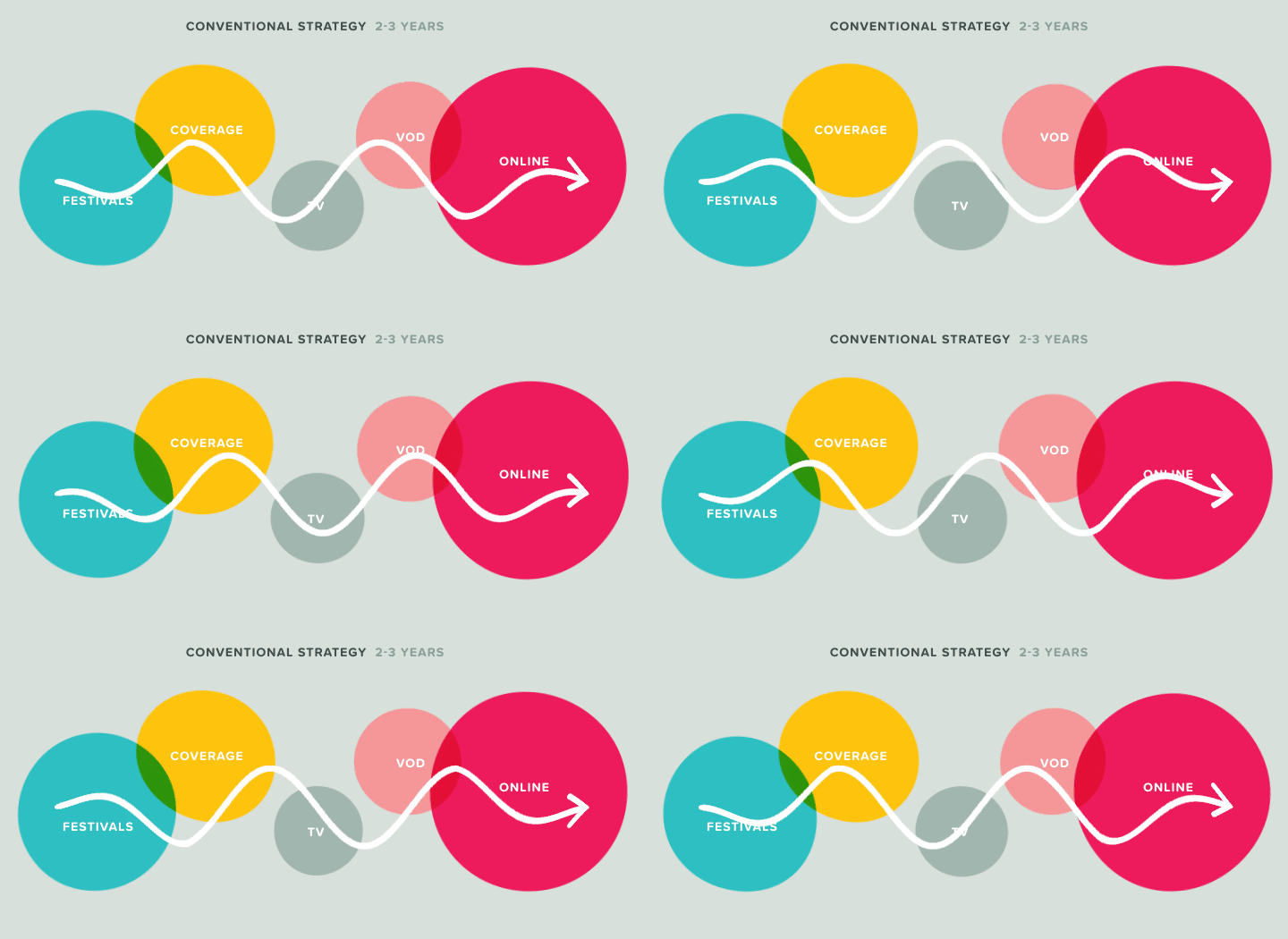
You’re proud of your short film! You want to launch it into the world so you create a release strategy. Typically, it looks like this:

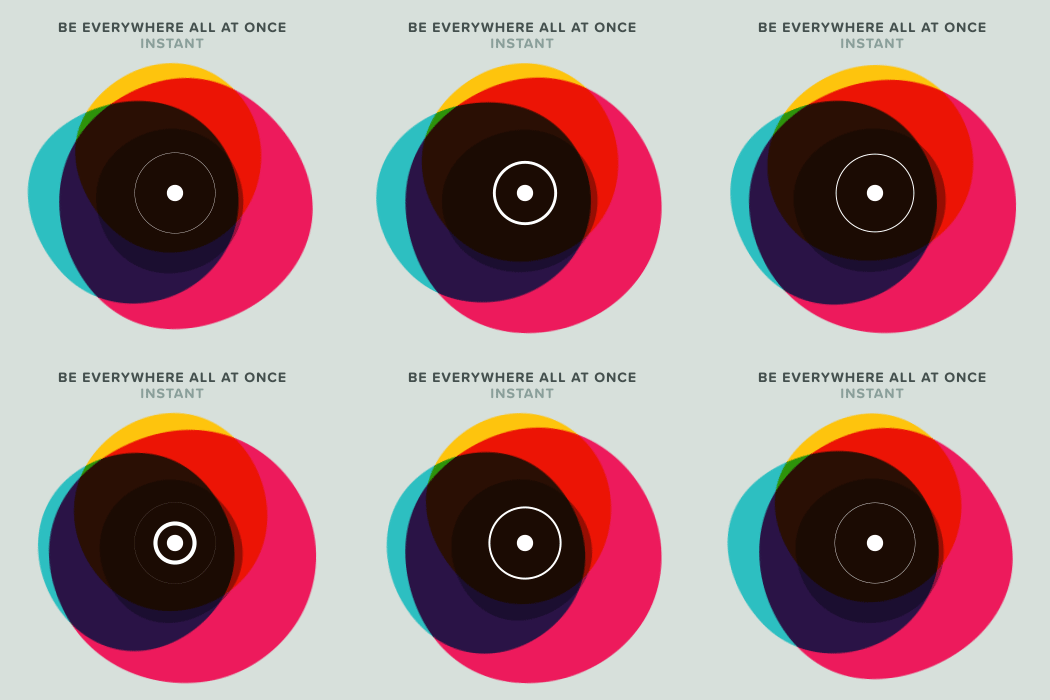
Andrew S. Allen, of Short of the Week, thinks it should look like this:

He’s arguing from a partisan position because he’s part of an online festival that can premiere your short, but I think he make a lot of sense.

He even has survey results and statistics to back up his assertions.

In a nutshell, he suggests:

  1. Create an online + festival strategy. Submit your film to online outlets early.
  2. Secure your premiere with a top tier festival or online site.
  3. Find partners — connect with curators to reach their audiences.
  4. Don’t prioritize money — it’ll likely hurt your exposure.
  5. Don’t sign away exclusivity — hang on to your right to ‘be everywhere’.
  6. Go cross platform and get your film everywhere.
  7. Internationalize your film with subtitles to reach even further.
  8. Compress your release window over days/weeks rather than months/years.
  9. Launch, engage and recalibrate during the week of your release.
  10. Be prepared to pitch your next idea or project.

My take: once upon a time, the mediascape was an orderly grid: on one axis you had ‘windows,’ a hierarchy of platforms (theatrical, pay TV, airlines, free TV, libraries, etc.,) and on the other axis you had ‘territories,’ geographic regions (North America, Europe, Australia and New Zealand, Asia, Africa, etc.) Then along came the Internet that blew away time and space. The ‘Conventional Strategy’ above harkens back to the time of the Old Mediascape. ‘Be Everywhere All at Once’ is firmly rooted in the digital New Mediascape. One great reason to adopt it: you never were making any money from your short, so you might as well get it over with with the BEAAO Strategy and save yourself a couple of years. After all, time is money.

Independents look to streaming worldwide

Further evidence of Netflix and Amazon Prime’s global advancement, Lata Jha, writing in LiveMint from New Delhi, India, reports that directors of smaller films are increasingly looking towards streaming platforms and away from the box office for exposure:

“For starters, these small films have always been squeezed for space. The Hindi film industry makes around 2,000 films a year, but there’s space only for 200 to 300 to release in the 9,530 theatres in the country… Smaller films grow only by word of mouth. But, given their limited shelf life, everything depends on the business managed within the first three days, before another film is ready to take over next Friday… That is where the digital platforms come in. Cheaper data and a country increasingly abandoning the idea of appointment viewing make these services a viable option for smaller films.”

This is significant because India leads the film world on many fronts. And yet, Indian independent filmmakers face the same issues as their sisters and brothers elsewhere.

My take: Isn’t it interesting that Bollywood has the same effect as Hollywood on independent filmmakers in each culture. Here in Canada, this makes me truly respect Quebec’s results; see the chart on page 118 of Profile 2016. It shows that whereas English Canadian films average about 1% of the box office, French films are hitting it out of the park at about 10%, with larger revenue as well. Could it be the key is the lack of a dominant commercial industry that allows a local independent industry to fill the void?

More proof content is king

More proof this week that we’ve moved beyond the infrastructure and the hardware to the point where content is indeed king.

Chris Welch of The Verge reports that Roku’s CEO Anthony Wood reveals:

“We don’t really make money… we certainly don’t make enough money to support our engineering organization and our operations and the cost of money to run the Roku service. That’s not paid for by the hardware. That’s paid for by our ad and content business.”

Earlier this year Roku admitted to earning more money on advertising than on the sales of its streaming boxes.

Little-known Roku may be positioning itself to replace television networks, as more and more viewers cut their cords.

As it flexes its muscles, Roku is toying with its UI, developing the Roku Channel that curates content from its suppliers. Wood again:

“The Roku Channel is our sort of sandbox for building a next-generation, content-first user interface. And someday, when we think it’s ready and good enough and has enough content in it, it’ll probably become the home screen. But that’s not going to happen right away.”

My take: with more and more Smart TVs coming with the Roku OS baked in, I think Roku might just come up the middle and best AppleTV, Amazon’s FireTV and Google’s Chromecast. Even though Netflix is king today, once Roku perfects their curation algorithm, it has a chance of becoming everyone’s home screen. The two problems this solves: there are too many apps to manage and there is too much content to wade through. One caveat: will viewers stomach the ads?

Greenlight Essentials harnesses big data for indies

Okay. You got the money. But you want your script to be the best possible — so that it connects with your audience. Wait, who are they again, and what do they want to watch? A crystal ball would come in handy right now.

That’s the promise from Jack Zhang and his company Greenlight Essentials.

Jack has combined his two loves, math and movies, to bring big data to indie filmmakers. He’s been collecting data for the last seven years and the insights are amazing. Jack can tell you how your plot stacks up, who your audience is and where they live.

With this information, you can improve your script and spend your marketing budget with confidence.

After ingesting your script and comparing over 40,000 plot elements with over 3,700 films and millions of box office records, Jack’s AI will plot the likely performance of your film. Change an element here and there, and see what happens.

Next, he’ll give you the demographics of the audience that responds best to your movie: their ages, occupations, incomes, purchase patterns and social media profiles.

Jack can also tell you where your audience lives in the US and Canada.

I recently asked Jack if creatives get upset when his algorithm undervalues their ideas.

“We are just funnelling audiences’ tastes to creatives.  It does upset people sometimes for sure, but it is just showing creatives that audiences want something else, and showing them the ways they can better shape their content to fit the audiences’ tastes.”

My take: this really is a crystal ball. If you ever felt that coverage is inherently skimpy and too much is left to gut decisions, this is worth checking out. Imagine only spending your ad dollars in the cities and on the social media platforms where your audience hangs out. Savings galore!

Telefilm green lights 45 first features and web series

Telefilm Canada has just released the list of 45 projects it will fund to the tune of up to $125,000 each.

Film schools and media co-ops across Canada nominated approximately 100 projects for Telefilm’s consideration.

Big ups to these projects from CineVic and the National Screen Institute with Victoria connections:

  • All-in Madonna (Arnold Lim, Ana de Lara, Susie Winters)
  • Esluna: The World Beyond (Denver Jackson, Daniel Hogg)
  • Q (Benjamin Musgrave, Dawn Bird, Dustin Griffin)

Arnold Lim says,

“Telefilm has proven to be a world leader in their support for filmmakers and this is just one more reason I am so proud to be Canadian. Thank you to the Talent to Watch program; we haven’t shot yet but I already feel l am a better filmmaker today than when we started this program — and it never would have been possible without Telefilm’s support.”

(For background on the Talent to Watch program, Telefilm’s upgrade of its Micro-budget program, see Barry Hertz‘s article in the Globe and Mail.)

My take: I’ve mentioned before that this is the best way for Canadian filmmakers to get their first features funded. Kudos to Telefilm for having the vision to nurture new storytellers and work on balancing the gender ratio in film at the same time. And congratulations to all the Victoria teams getting the nod this year!

The Rise of the Robots

As reported by Jason Torchinsky on Jalopnik, Marci Robin was buying a car when the dealership passed her a piece of paper that gave her pause:

She explains to him:

“The sales guy was handing me paper after paper with a brief explanation of what each one was for, and then he handed me that page — with literally nothing else on it — and just mater-of-factly said, ‘And this one is just to ensure you’re not a robot.’ We both said, ‘Really?’ And I don’t know if he’s just done it so long that it was normal to him now or what, but he was just like, ‘Yep.’

In an another story, Johnny Lieu writing on Mashable asserts that Donald Trump does not write all of those wacky tweets.

He says:

“Some are penned by White House staffers, and according to a Boston Globe report, these tweets are composed with grammatical errors and irregularities, intentionally included to sound like they’re written by Trump. This comes from two sources at the White House who spoke to the newspaper, both of whom said staffers would copy Trump’s expression. That includes the overuse of exclamation points, the capitalization of words for emphasis, fragments, and loosely connected ideas. While grammatical errors are present, staffers reportedly didn’t intentionally misspell words or names.”

So is “The Real Donald Trump” fact or fiction? How can we tell if Trump is truly tweeting?

Luckily Andrew McGill of The Atlantic can tell us which tweets are real and which are “fake tweets.”

In part, he reveals:

“It’s fun to see the words the algorithm found were most helpful in attributing a tweet to Trump or a staffer. Most of them aren’t words at all, but quirks of spelling or punctuation.

“@realDonaldTrump” (Trump/staff ratio = 14 : 1)
Trump was 14 times more likely than a staffer to mention his own Twitter handle, probably because he frequently quotes tweets about himself.

“#” (Trump/staff ratio = 1 : 5)
Staffer Trump uses hashtags all the time, something Android Trump doesn’t bother with much.

“Media” (Trump/staff ratio = 5 : 1)
With a president who is obsessed with news coverage and the “dishonest media,” does this surprise you?

“@foxnews” (Trump/staff ratio = 3:1)
Trump’s preferred cable channel gets a bump in his own tweets.

” “  (Trump/staff ratio = 8 : 1)
The president is also far more likely to include extra spaces in his tweets.”

Follow Trump or Not on Twitter.

My take: I think we’ve crossed a line if humans can’t vouch for humans anymore. Of course, you could also claim humanity crossed that line on November 8, 2016.