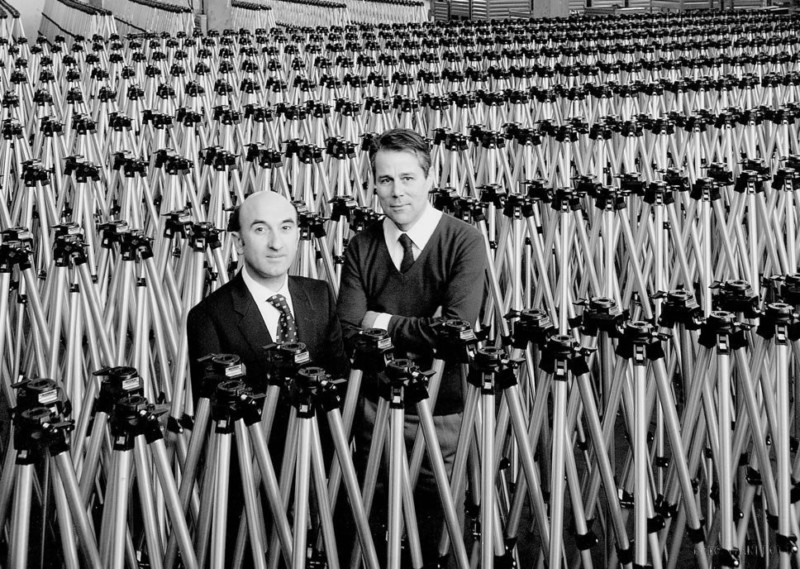
About Michael Korican

A long-time media artist, Michael’s filmmaking stretches back to 1978. Michael graduated from York University film school with Special Honours, winning the Famous Players Scholarship in his final year. The Rolling Stone Book of Rock Video called Michael's first feature 'Recorded: Live!' "the first film about rock video". Michael served on the board of L.I.F.T. when he lived in Toronto during the eighties and managed the Bloor Cinema for Tom and Jerry. He has been prolific over his past eight years in Victoria, having made over thirty-five shorts, won numerous awards, produced two works for BravoFACT! and received development funding for 'Begbie’s Ghost' through the CIFVF and BC Film.

Bot storytellers coming soon.

Benjamin Hoguet on CMF Trends wonders ‘How can chatbots be used to tell stories?

Chatbots, or bots, give the impression of a personalized online experience. Interacting with a bot replicates a real world one-on-one exchange, depending on the quality of the AI programming. Just ask Siri, the most famous bot, “How many Apple Store geniuses does it take to screw in a lightbulb?’ or ‘Is Santa real?’ or ‘Tell me a story.”

According to Hoguet:

“It’s the democratization of chatbots that is revolutionary because today anyone can create his or her own chatbot and upload it to a Facebook page, for example.”

He recommends two tools, ChatFuel or PullString.

“‘Narrative chatbots’ are only just beginning to appear. A lot of them set themselves apart only by their capacity to show us what not to do, but that’s the advantage of pioneering projects: to help develop codes and a grammar for those who will follow in their footsteps. Conversing with fictional characters is today’s predominant use of narrative bots.”

Hoguet envisions “the eventual arrival of bot stores. Just like app stores, they will definitely contribute to elevating chatbots to the level of full-fledged distribution platforms.”

My take: this is worth noticing because the top four messaging apps (WhatsApp, Facebook Messenger, WeChat, and Viber) have surpassed the top four social networks (Facebook, Twitter, LinkedIn, and Instagram) in monthly users, according to Business Insider UK. For instance, imagine if Tom Thomson’s tweets were a (messenger) dialogue rather than a (Twitter) broadcast.

Cinema not dead, just bloated — Schrader

As quoted in the Independent while talking about his new film Dog Eat Dog, Paul Schrader asserts:

“Don’t confuse the multiplexes with cinema. The multiplexes have run their course. That’s a 20th century phenomenon that has gone. But there is still obviously a lot of audio-visual entertainment – there’s a tsunami of product. You can’t really say cinema is dead. If anything, it is bloated and overpopulated at the moment. Cinema had a magical deal with capitalism for 100 years. If you’ll pay to see it, we’ll make it for you. Movies are now like painting, literature or music. What percentage of musicians make a living? Three or four per cent? We are now getting to that point where only maybe five per cent of filmmakers make a living.”

He continues:

“The reason I am doing press and going to festivals is to be number one VOD on our opening VOD weekend. If you can be the top VOD film at the (opening) weekend, then you make money. That’s where the economics of a film like Dog Eat Dog lie right now. You’re never going to make money theatrically.”

My take: It’s rather sobering to hear this from Paul Schrader, the man who wrote some of Martin Scorsese‘s best films, including Taxi Diver and Raging Bull. But it’s hard to argue with him that clicking on the top of a VOD queue hasn’t replaced queuing in line under a cinema marquee.

CMF lists support for Canadian exports

Amidst a background of reflection on Canada’s cultural place in a digital age, the Canada Media Fund has published a list of federal and provincial support for audio-visual exports.

The 10-page PDF list 6 national and 19 provincial programs, ranging from 1 in Yukon to 4 in Ontario.

For instance, Telefilm Canada‘s International Marketing Program:

“…seeks to support the marketing of Canadian feature length and short films that have a huge potential for success. Supports the international promotion and marketing strategy for Canadian productions officially selected to be presented during a recognized international festival. Nature of the assistance: Non-reimbursable contribution that can reach 100% of eligible costs, up to a cumulative maximum of $40,000 per eligible production.”

My take: as we look beyond our borders, this is handy information.

ourscreen does cinema-on-demand in the UK

Stephen Follows in the UK has just posted an excellent analysis of cinema-on-demand in general and about ourscreen in particular.

Stephen’s main belief is that “the emergence of online tools empower audiences to communicate and organize.”

About ourscreen:

“ourscreen empowers film fans and local communities to create and attend screenings at their local cinema. ourscreen is where film fans can control their local cinema. In three easy steps (pick a film – decide where and when – share your screening), we are all able to create film screenings for our friends or anybody who wants to come. If enough people book tickets the screening happens. This is people-powered cinema. ourscreen offers a quick and easy way to make the cinema yours, whether you are a film fan, a school group, a local business or anyone who wants to enjoy a great film in an amazing cinema.”

Stephen includes three case studies that reveal actual performance numbers. ourscreen claims their overall screen average is £621 or roughly $1040 CAD.

My take: I’m glad to see there are multiple firms in the cinema-on-demand business in both the UK and the US. What I really want to see is someone start this up in Canada.

The Future of Cinema is — TV

Can feature films still claim to be the pinnacle of cultural expression?

Perhaps, but not as once enjoyed in movie palaces. Today, the point of consumption is a much smaller, private, screen, in the living room or the pocket.

No one doubts that movies are big business. The Ringer notes:

“According to Box Office Mojo, 704 movies — the most ever — were released last year that grossed at least some money in theaters. (The lowest, Confession of a Child of the Century, drew $74 in limited release.) The American theatrical movie industry raked in an extraordinary $11 billion at the box office, more than any other year. But that data point is misleading because it did so with the third-fewest tickets sold in the past 20 years, against the highest average ticket price in history ($8.43) and the highest number of releases. This includes the accounting for Star Wars: The Force Awakens, which, with a lifetime gross of $937 million, is the biggest domestic release in movie history by more than $175 million.”

Entertainment conglomerates are in business of filmed entertainment, not cinema art.

Therefore, as quoted in the same article, Bret Easton Ellis predicts:

“There will not be another Coppola. There will not be another Spielberg. There will not be another Scorsese. There will not be another Altman. Because the melding of that kind of artistic mind with a cultural experience, which was going to the movies and watching a large-scale film on a giant screen that’s not IMAX that isn’t a Marvel movie, is over. It’s shifted to television, and that basically now what we’re going to get on television, is someone trying to recapture the glory of 20th-century cinema on TV.”

My take: If Ellis is right, we find ourselves in a lamentable situation. When I was growing up, there was no question, cinema far exceeded television as a medium for artistic expression. TV was where movies went to the panned, scanned and injected with commercials. It’s almost as if they’ve traded places.

Netflix raises $1 Billion for new content

Further to my post last week, Variety reports that Netflix is raising one billion dollars to finance its new content.

“Netflix said it is raising $1 billion through a new debt offering, bringing its long-term debt load to more than $3 billion. The offering was upsized from an aggregate principal amount of $800 million originally announced Monday morning.”

It’s a good thing subscribers seem to prefer its original content. AllFlicks claims:

“Netflix user ratings show that Netflix’s subscriber base prefers Netflix’s original content to its syndicated content. Netflix originals sport an average rating of 3.85 stars out of five; all other content averages 3.47 stars. That means that user ratings for Netflix originals are 11% higher, on average, than user ratings for syndicated content. Netflix does best in the documentaries category, where users rate non-original content, on average, at 3.54. Netflix’s documentaries average 4.07 stars, a pretty impressive showing. Netflix’s TV shows do the worst, but still edge their other TV show content by 5.7%.”

Polygon reports that CEO Ted Sarandos says:

“The company wants to move to having about 50 percent of its catalog being original content… but according to recent reports, Netflix’s library has actually shrunk by 50 percent in the past four years.”

Gizmodo corroborates:

“Netflix’s content library isn’t just getting smaller, it’s also increasingly losing its best movies. The Streaming Observer did some analysis, and found that only 31 movies from the IMDb Top 250 are currently available on Netflix…. Even worse than the paltry selection of movies, it’s noteworthy that this figure is actually down 12 percent from 2014, when a Reddit user documented the 49 available films from the IMDb Top 250 then available on Netflix.”

My take: it seems somewhat disingenuous of Netflix to say its content is 50% original if it’s also reducing the number of films on the service. The analogy is crude, but it’s the difference between peeing in the kiddie pool and peeing in the big pool; the concentration of the same amount of pee is higher in the smaller pool.

Netflix continues to expand

Netflix continues its expansive plans.

BuzzFeed reports the SVOD (subscription video-on-demand) giant will spend $6 billion on content this year, in the process creating 1,000 hours of original shows.

Meanwhile Esquire reports that the streaming service has made a deal with iPic Cinemas of New York and Los Angeles to screen 10 of their original motion pictures in their theatres, on the same day the flicks debut online. Speculation is that Netflix wants to take home an Oscar, to join their many Emmy award wins, because to be eligible a film must have played at least one week in both cities.

Meanwhile, some filmmakers are turning their backs on Hollywood and making multiple-picture deals with Netflix instead. For instance, IndieWire reports that Mark Duplass‘s “latest film, the romantic drama ‘Blue Jay,’ was financed by Netflix without the company even seeing a script. Instead, Duplass wrote a 10-page outline that allowed for significant improvisation during shooting.”

My take: I wonder how big Netflix needs to get before U.S. antitrust concerns arise. It was less than 70 years ago when the Paramount Decision decreed that vertically-integrated movie studios needed to divest their theatres, as this had created an oligopoly.

Demand.film launches cinema-on-demand service

The cinema-on-demand space is about to expand.

Joining Tugg and Gathr is new-comer Demand.film.

According to Forbes:

“The three Australian entrepreneurs who created the platform say their dual aims are to enable filmmakers from around the world to reach audiences who would not otherwise get the chance to see their works, and to supplement traditional theatrical distribution.”

They are also disrupting film exhibition accounting and reporting:

“Demand.film is the first crowdfunding cinema service to use blockchain technology to create databases which record high-level, scalable sales information that can’t be changed. ‘The advantages that gives us are transparency and trust with producers, distributors and exhibitors, which will be transformational in the accounting side of the business,’ says David Doepel, the firm’s managing director.”

According to Startup Daily:

“The platform uses blockchain technology to enable independent filmmakers to negotiate a multi-country release in one single deal. While the Demand.film team are being tight lipped on the features of the new platform, Doepel said that the upgraded functionality has been specifically designed with audiences and cinema in mind. Vice president of operations and development for Demand.film Barbara Connell further explained, ‘We’re incorporating some fantastic fintech, which includes Blockchain technology. This will be complemented by new dashboards that can be married to social media campaigns and other social media activity. While this all seems very complicated, the platform has been designed to be very easy to use and to be nimble.'”

Demand.film also operates in New Zealand and the United Kingdom and plans to expand to other countries and North America in 2017.

My take: come to Canada, please! There is so much under-utilized capacity in movie theatres, particularly outside of busy Friday and Saturday nights. How many times have you gone to a matinee only to find merely a dozen or so  fellow patrons sitting in the dark? I would definitely become an impresario once again because the cinema-on-demand model assures a win-win-win-win screening for the filmmaker, the audience, the theatre and the organizer.

Smart contracts come to film financing

I’ve written about the blockchain and smart contracts before. Now we have a breakthrough: the first film using both!

The film is called The Pitts Circus and promises to be a “feature length-horror-comedy movie incorporating the skills, comic talent and uniqueness of a real Australia circus family”.

Investors who buy some of the 666 shares with cash or Ethereum are guaranteed to share in 50% of the profits until 2036. Single shares are $150 USD or 10 Ether.

Caveat emptor:

‘As always with indie movies, there is only a small chance for a huge success — but in case it does take off, it is a journey to the moon.”

Use a wallet you know you’ll control until then because the smart contract will distribute the proceeds, if any, to that account.

My take: I know this sounds a bit weird, but it represents a radically different way to raise financing and settle contracts by using crypto-currency and smart contracts, both made possible by the blockchain. This illustrates the power of the blockchain — it does away with the friction of intermediaries, in this case bankers, advisers, lawyers and accountants. (For kicks, work out how much the 2007 million dollar coin is worth today!)

CMF releases Discoverability report

Trends by the Canada Media Fund has released the second part of its research into Discoverability and discovered that Canadian viewers are both aspirational and inspirational:

“All they are looking for is to be happy, have the best day possible and — ultimately — be validated and inspire their friends. In a nutshell, they are seeking to live a fulfilling experience.”

Other takeaways, quoting liberally:

  • The more audiences are offered the convenience of on-demand content and a varied range of content to choose, the more they watch content online. [Duh.]
  • 59% of Canadian TV viewers aged 18+ say they discover new TV content through recommendations from friends. [Witness the Rise of Social Media.]
  • It’s the X, Y and Z generations (the 18 to 49-year-olds) that not surprisingly rely on their friends for discovery, whereas boomers rely more on TV and radio commercials. [True, but keep in mind the oldest Gen-X’ers are 56 now and the youngest Gen-Z’ers are not yet teenagers.]
  • Being a viewer, or a consumer of content, is much more multifaceted than sitting back and having content just ‘wash’ over you. The state of ‘audience-ness’ is now dynamic, participatory, cross-channel, and both synchronous (in real time) and asynchronous. [Welcome to the Matrix.]

Read the complete PDF.

My take: Word-of-mouth still rules! Only now, you might ‘hear’ it online first — and your friend might live on another continent rather than around the corner.