Can the Ethos Equity Model Finance Indie Films?

Jason Hellerman of No Film School interviews Ariel Heller and Sam Baron about financing in How ‘Circles’ Is Using Radical Transparency and an Equity Model to Build an Indie Feature.

Jason quotes Ariel:

“In the traditional finance model, indies rely on underpaid labor, opaque accounting, and the promise of exposure that rarely materializes into real participation. Whereas in this equity model, everyone from director to PA works for the same rate (a competitive indie wage pegged to the SAG minimums) in exchange for equity. Most crews never see a budget, never understand a waterfall, and never receive a dollar after wrap. By opening the books, educating collaborators on the model itself and giving access to budgets and cap tables, we remove the suspicion that has defined so much of the industry. Transparency builds confidence, and confidence builds better work.”

Their inspiration comes from Clint Bentley and Greg Kwedar. See their Ethos Equity Financing Model.

See Wrapbook to understand traditional Equity Financing.

My take: I like the thought behind this. Using “set time” to determine equity gets everyone in the game, however, it also devalues intangibles like a screenwriter’s years of rewrites, a cinematographer’s film school debt and an actor’s clout. To make this work, I think you’d have to assign in-kind value to these and other intangibles and add this to the Investor side. Then 60/40 to 120%, followed by 50/50 could make sense. Basically, this model has craftspeople in front of and behind the camera share 40% of all income from the first dollar, distributed by time worked, hopefully rising to 50% at some point.


Write a commercial spec script, please!

Franklin Leonard of The Black List makes The Moral Case for “Selling Out”.

Read the full post because it’s guaranteed to get your fired up for 2026. Leonard starts with:

“If you’re an aspiring professional screenwriter and you want this to be your job, write a commercial spec script.”

By commercial, he means something real audiences will pay to watch.

He then goes on to ask nine questions you must answer before you spend your limited time and energy on a script:

  • Can you make a busy person want to read it in a single sentence?
  • Is it in a genre lane with an engine?
  • Does your protagonist want something visible and external?
  • Do you have a “big bad?”
  • Do you have a ticking clock?
  • Do the stakes escalate?
  • Do you have set pieces?
  • Do you land the plane?
  • Is it yours?

He concludes with this exhortation:

“Earnest as it may be, I still believe that a popular movie, done right, is a small act of care at a global scale. Look around. The world out there is rough right now for almost everyone. If you can help people set down whatever they’re carrying for two hours and, as Miyazaki puts it, “find unexpected admiration, honesty, or affirmation in themselves, and… return to their daily lives with a bit more energy,” there’s absolutely nothing soulless or frivolous about that.”

My take: I agree log lines are very important. Roger Corman would start with the poster. In both cases, they represent the concept of your story: the sum of character, plot, setting, conflict, and theme. This is the DNA of the work — choose carefully.

The new age of cinema begins

Dana Harris-Bridson reports in IndieWire on Creator Camp and the Three-Picture Theatrical Deal: Attend Is Betting the Internet Can Fill Movie Screens.

She writes, “The Austin-based creator collective distribution arm, Camp Studios, signed a three-picture theatrical deal with Attend Theatrical Marketplace, the Fithian Group company that connects filmmakers directly with movie theaters, streamlining the process of booking and releasing films.”

“The real bet is if creators already know their audience, why can’t that audience show up to a cinema?”

The first test is indie rom-com Two Sleepy People.

My take: I’ve been waiting for this moment for twenty years, ever since video first started appearing on the Internet.

This is much more than a story about a distributor picking up a movie for distribution; it’s tentative proof of a new and emerging theatrical distribution model that will replace the crumbling one.

The big difference to me is the importance of Audience. In the Legacy Model, it was simply assumed that the audience would show up if enough money was spent on marketing. In the New Model, online creators have ongoing relationships with their audiences before making their movies and then rely on them to manifest local screenings on demand through critical mass.

In simple terms:

OLD = Legacy Creator -> Movie -> Distributor -> Cinemas -> Audience.

NEW = Online Creator -> Audience -> Movie -> Distributor -> Audience -> Cinemas.

Best wishes to Attend and Creator Camp!

Rio and friends step up to save Vancouver’s Park Theatre

Part of Vancouver’s film history has been saved by Corinne Lea of the Rio Theatre and a group of private investors, reports The Hollywood Reporter.


View this post on Instagram


A post shared by Corinne Lea (@corinne_riotheatre)

From her statement:

“The Rio Theatre is very excited by the opportunity to revive Vancouver’s historic, art-deco Park Theatre in the beloved Cambie Village neighbourhood. We are grateful for the support of this impressive group of film industry professionals, and could not do this without them! After almost two decades of rocking the Rio, we look forward to this expansion, and bringing the same fun, energy and passion to a new location.”

Among the investors are:

  1. Chris Ferguson
  2. Osgood Perkins
  3. Mike Flanagan
  4. Sean Baker
  5. Samantha Quan
  6. Zach Lipovsky
  7. Finn Wolfhard
  8. Graham Fortin
  9. Eugenio Battaglia
  10. Andy Levine
  11. Jill Orsten
  12. Christina Bulbrook

My take: I applaud this effort because local control of movie screens is critical for a truly independent national cinema.

Netflix confirms 14 day theatrical run for Knives Out 3

Jack Dunn in Variety reveals that ‘Wake Up Dead Man: A Knives Out Mystery’ Sets Two-Week Theatrical Release Before Netflix Rollout.

The third instalment in the ensemble mystery franchise featuring Daniel Craig’s Benoit Blanc will screen in selected theatres globally for 14 days starting November 26 before streaming on Netflix on December 12, 2025.

In 2022, “Glass Onion: A Knives Out Mystery” played in 600 cinemas for one week one month before streaming.

My take: kudos to Rian Johnson for putting this in his Netflix contract. Could this become their new norm, after Netflix’s success with its two-day KPop Demon Hunter theatrical release?

Make features, not shorts, says distribution consultant

Film Courage asks Zac Reeder, an Emmy-nominated producer’s rep and distribution/financing consultant, “What is it that 99% of filmmakers don’t understand about distribution?

He says people spend too much and don’t cast recognizable actors.

And, “A lot of people would be shocked if they saw the real numbers.

But he also says:

“I encourage people not to just make short films, but to make features because if you can make a short, I think you can make a feature, because you’re almost there. It’s a little bit more money, but a feature is much better; it has some marketability.”

Zac’s company, Lucky 27, provides Financing & Distribution Strategy, Producer’s Representation, Negotiation and Deal-Making and Marketing and Promotion services.

My take: having made over 60 short films, I totally agree. There is no money to be made making shorts. Features, technically, have a market. Of course, what’s distinctly missing here is what the market is looking for, how to attract those known actors and how to raise the money. Guess that’s where the consulting services come in.


Canadian movies, by annual box office

In honour of our upcoming Canada Day, I thought it would be patriotic to take a look at the biggest all-time world box office numbers for Canadian movies produced in the last ten years.

See the excellent The Numbers website and their Top Canadian Movies of Each Year listings. The Top 10 by box office from 2016 to date:

Year Movie Budget Box Office
2020 Sonic The Hedgehog $90,000,000.00 $302,452,077.00
2023 PAW Patrol: The Mighty Movie $30,000,000.00 $201,739,292.00
2019 The LEGO Movie 2: The Second Part $99,000,000.00 $192,306,508.00
2024 Paddington in Peru $75,336,729.00 $192,148,490.00
2023 Insidious: The Red Door $16,000,000.00 $186,258,928.00
2021 PAW Patrol: The Movie $26,000,000.00 $151,403,419.00
2019 Midway $100,000,000.00 $126,787,360.00
2021 The Addams Family 2 Unknown $119,383,236.00
2019 Scary Stories to Tell in the Dark $28,000,000.00 $104,793,708.00
2016 Ballerina $30,000,000.00 $96,451,584.00

The Top Ten with Biggest Return on Budget:

Year Movie Budget Box Office Return %
2023 Skinamarink $15,000.00 $2,131,183.00 14208
2023 Insidious: The Red Door (US?) $16,000,000.00 $186,258,928.00 1164
2016 The Witch $3,500,000.00 $40,364,725.00 1153
2017 My Little Pony: The Movie $6,500,000.00 $61,294,644.00 943
2016 Embrace (Australia?) $225,000.00 $1,611,592.00 716
2023 PAW Patrol: The Mighty Movie $30,000,000.00 $201,739,292.00 672
2021 PAW Patrol: The Movie $26,000,000.00 $151,403,419.00 582
2016 Race $5,000,000.00 $23,745,772.00 475
2019 The Lighthouse $4,000,000.00 $18,237,527.00 456

Confused by these titles? Paddington in Peru? Movies are international productions now and get certain work done in tax credit-friendly jurisdictions for the money – and the excellent work skilled artists and technicians provide, of course.

CAVCO certifies Canadian movies. The CRA then refunds money to the Canadian producers of these movies, to the tune of millions of dollars. (Wouldn’t it be nice to know which movies Canadian taxpayers are helping fund and for how much? Other than checking the credits, I don’t know of a comprehensive list. But here’s a cost report from BC.)

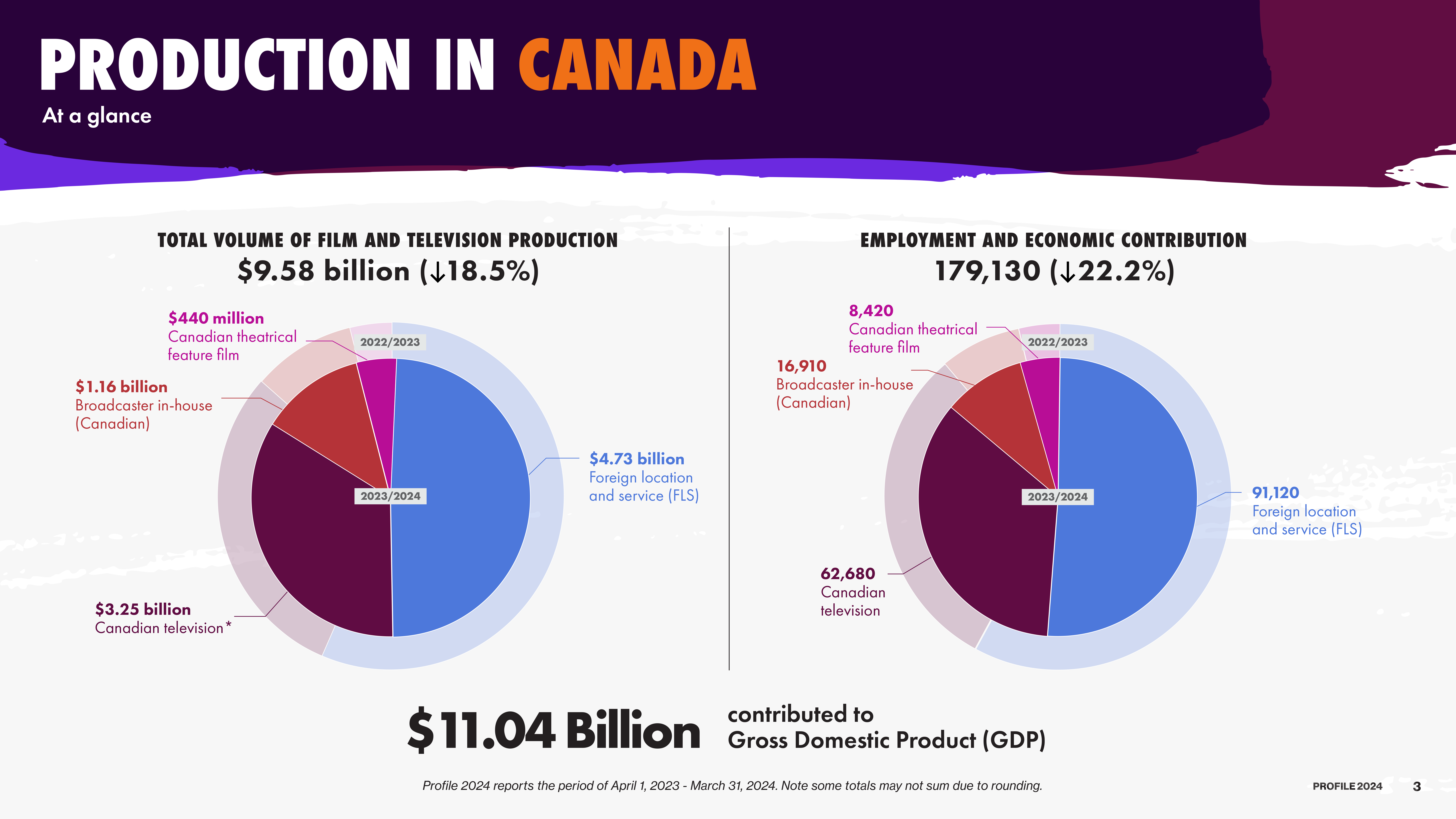
Is Canadian investment in Canadian movies worth it? Check Cinema of Canada to see how small the Canadian production and box office numbers actually are. And direct employment in Canadian movies is less than 8,500 people. That’s a government subsidy of something like $25,000 per job. (Someone please tell me my math is wrong.)

My take: The Hollywood Reporter recently published a list of The 51 Best Canadian Movies of All Time – now where have I heard that particular number recently? Curiously, I don’t think any of these movies appear on their list.

Funding + Screening, together now

Brian Welk reports on IndieWire that From Film Funding to Distribution, This Partnership Gives You Control: ‘Anyone Can Do This’.

The partnership in question is between Seed&Spark and Kinema.

Unlike other crowdfunding platforms Seed&Spark is purpose-built for film & TV projects. They have a phenomenal 82% success rate.

Kinema is a tech platform that enables non-theatrical exhibition — what you may call grassroots screening tours — of films in person and online. We make it easy and rewarding for anyone, anywhere to organize moving showings and share in the proceeds.”

Brian states:

“Those who fund programs on Seed&Spark get a dedicated Kinema account manager and custom distribution consultations. Fees are waived for filmmakers with over 500 followers or over 1,000 campaign backers.”

But hey, if you want to DIY, at least check out their free online resource The Distribution Playbook.

My take: well worth further investigation!

Attend platform will allow filmmakers to connect directly to cinemas

Jeremy Kay reports on Screen Daily that Former top exhibition sector lobbyists unveil digital marketplace to boost theatrical supply.

“The Attend platform will champion mid-range films that have largely disappeared from cinemas, as well as international films seeking release in North America, and films that typically receive limited theatrical release and could reach broader audiences through data-driven theatre selection, scheduling and marketing.”

Some features:

  • Filmmakers will be able to upload details and materials of their films directly
  • Exhibitors will be able to search the database
  • The platform will recommend films to exhibitors based on the preferences of their theatres and audiences
  • The platform will facilitate the logistics of projecting films in cinemas.

The Attend platform is being developed by The Fithian Group of John Fithian, Jackie Brenneman and Patrick Corcoran.

Dozens of filmmakers support the concept, including Ted Hope and Steven Soderbergh.

Read an in-depth interview with The Fithian Group for more.

My take: this solves the “supply to theatres” issue, by cutting out distributors. I’d love to see some Canadian cinemas join — not that I have anything against Canadian distributors — it’s just that Canadian filmmakers have historically been shut out of Canadian cinemas by American distributors. How ironic that this American initiative might solve that for us.

Calls for an indie film marketplace and discoverability

Brian Welk reports on IndieWire that Study Reveals Untapped Market of 40 Million People Who Will Pay for Indie Films on Streaming.

He sets the context with:

“After a decade of massive growth, the indie film industry hit its peak in 2017 with just over 200 independent films in theatrical release. That’s also when streaming began to make itself known in a very big way, and the number of indie films in theaters began to plummet.

Netflix and the like spent a few years gobbling up indie movies out of festivals, but that’s dramatically slowed since 2021. Viewership for indies on streaming dipped from 30M in 2020 to just 18M by 2022. Indie films — and the audience for them — are being left behind.

Former Sundance Institute CEO Keri Putnam led the “US Independent Film Audience & Landscape Study” a 118-page report available at indiefilmlandscape.org and believes there’s a massive audience waiting for indie movies because the biggest challenge facing independent films is finding them.

Her key recommendations for the indie film sector are:

  1. Combat market fragmentation with a new, consolidated streaming destination
  2. Invest in Theatrical Exhibition: Build data and marketing capacity at Festivals and Independent Cinemas
  3. Invest in 21st Century Streaming Public Media and Include Scripted Films on PBS
  4. Leverage Free, Mass Market Platforms: Build a field-wide vertical on a mass-market free streaming platform
  5. Expand and Engage Audiences of Color
  6. Thoughtfully enlist Brands and Philanthropy to Fund Production and Marketing
  7. Innovate on Sector-Wide Marketing
  8. Deepen and Enrich Engagement with Younger Audiences and Fan Communities
  9. Conduct More Research and Share Data Across the Field
  10. Build a Trade Organization to Facilitate Field-Wide Research, Innovation, Public Policy Advocacy

Read the full report.

My take: an indie film marketplace and discoverability. Yes, the two things every indie filmmaker wishes for. I know I’ve been searching for the last twenty years however it’s almost impossible to accomplish in this digital age, which is maddening because digitization was supposed to level the playing field — but what happened was that everyone made their own field. “Build it and they will come” is almost never true now.